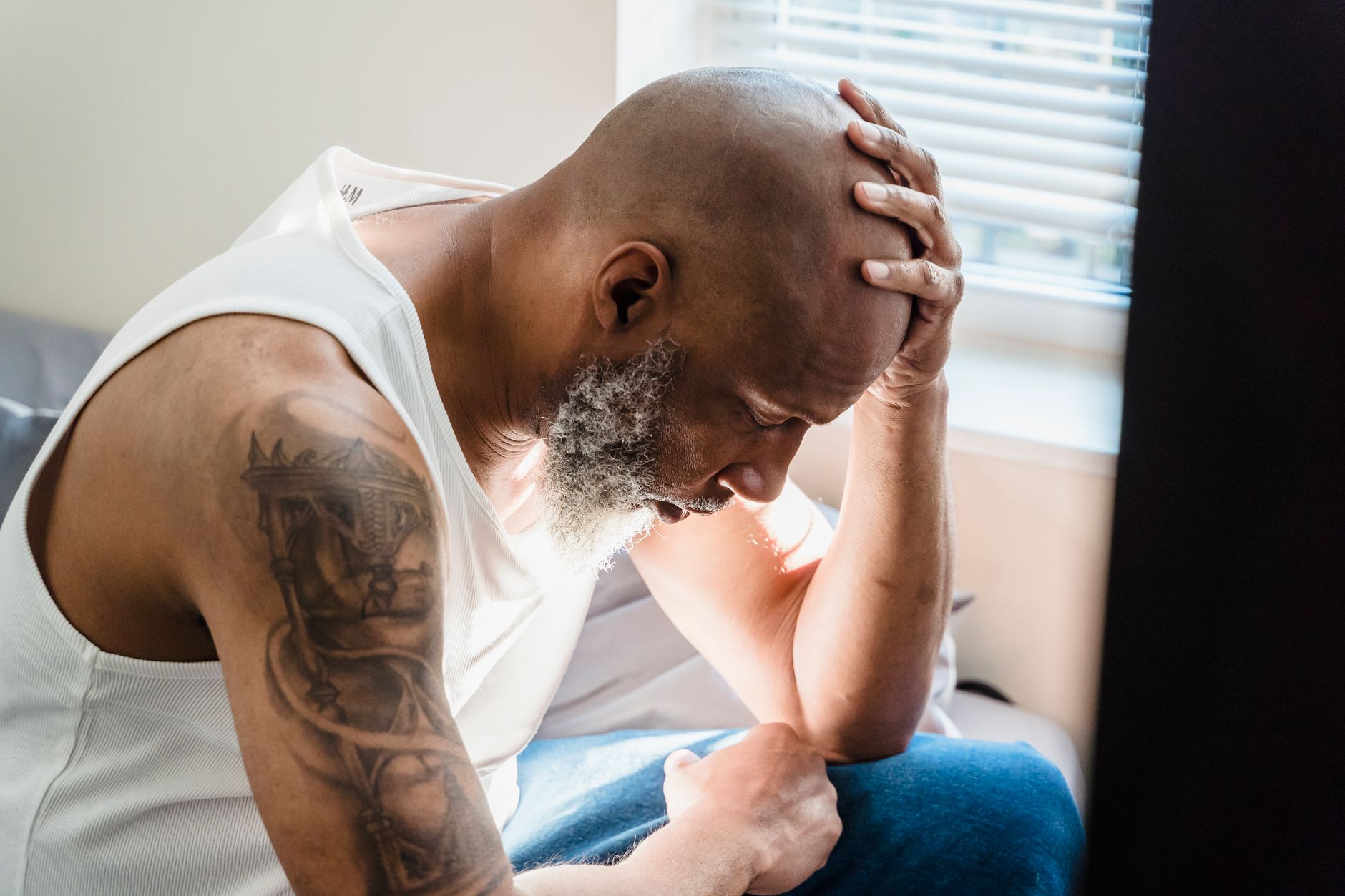
A child comes out, and a parent realises something quietly: the sex talk they were prepared to give doesn't apply. The contraception briefing assumes one anatomy. The "be careful out there" warnings assume one set of risks. The vague hope that they'd "find a nice partner one day" was furnished with a default the child has just stepped outside of. This piece is for parents in that moment — wanting to help, unsure what they're allowed to say, worried about getting it wrong.
Start by handling your own feelings elsewhere
Before you become your queer child's source of sex information, you need to have processed your own reaction somewhere they don't have to witness. This is non-negotiable.
It's normal to grieve the imagined version of your child's life that won't happen. It's normal to fear for them in a country where queerness is still sometimes dangerous. It's normal to feel out of your depth. None of this is bad in private. All of it is harmful when delivered to the child.
Find a therapist, a friend, a parent's support group, or a church community that affirms queer kids (PFLAG-equivalent groups exist in South African cities — PFLAG SA, OUT-affiliated parent groups). Process there, not at the kitchen table.
What your child actually needs from you
Surveys of LGBTQ+ adults consistently show what they wished their parents had done:
- Made it clear, repeatedly, that the parent's love wasn't conditional
- Treated their relationships as real — not lesser, not theoretical, not phases
- Not made the child explain or justify their orientation
- Provided practical information about queer sexual health
- Asked about their dating life with the same warmth used for siblings
- Not weaponised acceptance — "I love you anyway" is not the same as love
Your child likely has access to plenty of information online. What they often don't have is a parent who treats their queerness as ordinary and asks how their date went.
The information gap
South African school sex education is uneven, often abstinence-leaning, and almost universally heteronormative. Your queer child probably hasn't been taught:
- How to actually have safer sex with someone of their gender
- What PrEP is and how to access it (highly relevant for young gay/bi men and transgender women)
- How to access non-discriminatory healthcare
- How to think about consent in queer contexts
- What healthy queer relationships look like
- Where to find queer community
This is information your child needs. Whether you provide it or you point them to people who can, the gap has to be filled.
If your child is a young gay or bisexual man
The most important practical conversation, once they're old enough to be near sexual activity:
HIV remains a concern, and PrEP is freely available in South Africa to anyone at risk. PrEP (pre-exposure prophylaxis) is a daily pill that prevents HIV infection. The Department of Health offers it free at many clinics, and private GPs prescribe it. Your child should know it exists, is safe, and is normal.
Other practical points:
- Condoms still matter — they prevent other STIs
- Regular STI testing every 3-6 months when sexually active is normal
- The Health4Men programme run by the Anova Health Institute provides specifically gay-friendly clinical services in several cities
- OUT (out.org.za) has practical sexual health resources written for young queer men
Frame this as practical, not as warning. "Here's how queer sex stays safe" lands better than "Be careful, this is dangerous".
If your child is a young lesbian or bi woman
Different information is needed, and is often forgotten:
- STIs do transmit between women — through fingers, toys, oral sex. Many young women have been told their sexual partners are "safer" and aren't sure why their gynae is asking the same questions
- Pap smears and HPV vaccination still matter, regardless of partner gender
- Toy hygiene matters, especially when sharing
- Pregnancy is not a risk with cis female partners but is a risk with trans men or nonbinary partners with uteruses or other configurations — the "you can't get pregnant" conversation often glosses over this
- Domestic abuse exists in queer relationships at similar rates to straight ones — your daughter needs to know that "she would never hurt me" isn't a guarantee
If your child is transgender
This is where parental support has the largest documented effect on long-term outcomes. Trans kids with supportive parents have dramatically better mental health outcomes than those without.
Practical information:
- Medical transition pathways in South Africa are accessible but slow. Public-system gender clinics exist in Cape Town and Johannesburg with long waiting lists; private providers shorten timelines significantly
- Hormonal transition affects fertility — fertility preservation options should be discussed before starting hormones if it matters to your child
- Sexual function changes with hormones in ways your child should be prepared for
- Trans people experience high rates of sexual violence; safety planning matters
- Iranti (iranti.org.za), Triangle Project, and Gender DynamiX are South African organisations with concrete resources
The single most useful sentence: "I want to know about your life. Tell me about who you're seeing." Trans kids often feel their relationships are invisible to family because parents are uncomfortable; visibility is a form of love.
If your child is bisexual
Bisexual kids often face a particular kind of erasure — both straight and queer communities sometimes treat their orientation as not real. Parental risk: assuming the orientation is a phase or will resolve toward straight or gay. It usually won't.
Useful posture: take the orientation as fully real, ask about partners regardless of gender with the same warmth, don't make assumptions about which "side" they'll end up on. They are who they are now.
If your child is asexual
Around 1% of people are on the asexual spectrum. Asexual kids often face a different kind of pressure — being told their orientation is medical, will pass, or is symptom of something wrong. It's not.
What helps: take it as a full orientation, not as something they need to outgrow. Don't ask "have you tried" or "you're young, you'll change". Aces have romantic lives, partners, and meaningful intimate relationships; the absence of sexual attraction isn't the absence of relationship capacity.
The "boyfriend / girlfriend / partner" question
One small thing parents miss: the language you use about your child's relationships sends a signal. If you ask your daughter "Are you dating any boys?" you've just told her the orientation she's living isn't visible to you.
The fix: "Are you seeing anyone?" works for everyone. Once you know who they're dating, use that person's name and pronouns. Treat the relationship as real — invite the partner to family events, ask after them, remember details.
What not to say
A few phrases that consistently land badly, even when meant kindly:
- "Are you sure?"
- "You're so young, how can you know?"
- "I always knew" (sometimes okay in context, often patronising)
- "I'm worried about your life being harder"
- "Don't tell your grandmother / father / uncle"
- "It's just a phase"
- "I love you, but…"
- "Why do you have to label yourself?"
- "What did I do wrong?"
None of these are the worst things in the world, but each adds a small weight your child has to carry.
What to say instead
- "Thank you for telling me."
- "I love you. That's not going anywhere."
- "Tell me about who you're seeing, when you want to."
- "I might get things wrong sometimes — please correct me."
- "Is there anything you need from me right now?"
- "I'm proud of you for knowing yourself."
Practical resources to point them to
- OUT (out.org.za) — South African LGBTQ+ wellbeing organisation, queer-affirming health and counselling
- Triangle Project — Cape Town, broad LGBTQ+ services including counselling
- Iranti — trans, intersex, and gender-diverse advocacy and resources
- Gender DynamiX — trans-specific support
- Health4Men / Anova — clinical services for gay and bi men
- Engage Men's Health — community programmes
- SACAP and SAFPOPP — directories of psychologists and sex therapists, filterable for queer-affirming practitioners
The longer game
Coming-out isn't a single conversation. It's a years-long process where your child slowly tells more of the truth, watches how you respond, and adjusts how much they share. Every small gesture of acceptance compounds. Every small recoil compounds the other way.
The parents queer adults remember most warmly aren't the ones who said the perfect thing. They're the ones who kept showing up — asked about partners, came to the wedding, learned the new pronouns, made the partner welcome at Christmas, kept loving their child as their child became more themselves.
The bottom line
You don't have to know everything about queer life to be the parent your queer child needs. You have to do three things, repeatedly: love them visibly, treat their relationships as real, and provide or point them to the practical sexual-health information their school missed.
The rest you can learn as you go, and they'll teach you most of it themselves if they trust the conversation.