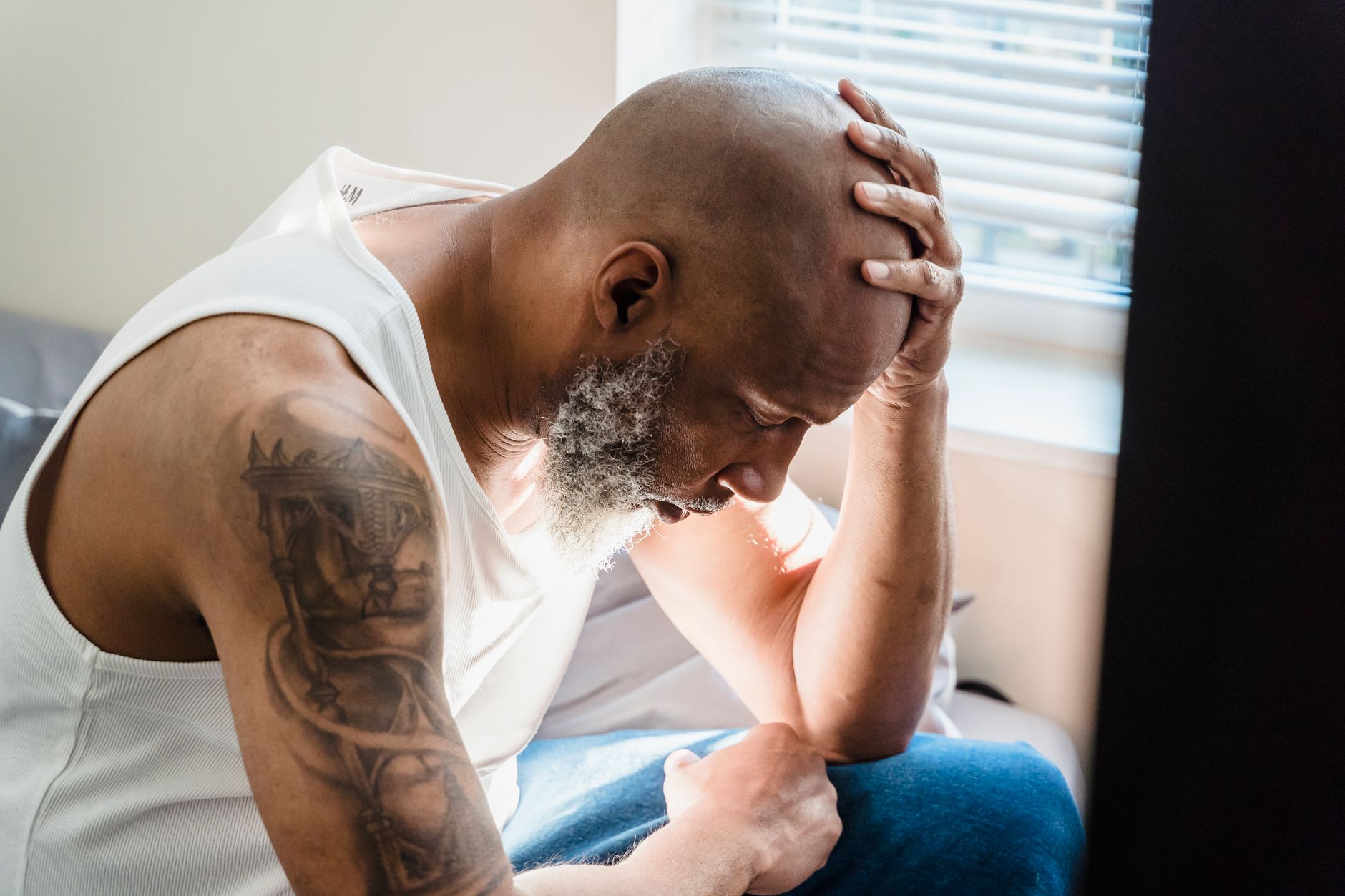
Gay culture has a complicated relationship with age. The dating apps, the bars, the marketing — most of the visible scaffolding is built around men in their twenties and thirties. Past that, things go quieter, then they go elsewhere. They don't go away. The 50-plus generation of gay and bisexual men is one of the largest, most experienced, and most quietly rich slices of queer life. This piece is for them, and for the partners and friends who want to see them clearly.
Some of you survived a war
Worth saying first because it shapes everything else. Gay men over 50 today are the generation that came of age during the worst years of the AIDS epidemic. Many lost partners, friend groups, sometimes whole social circles. Some carry HIV; some carry the survivor weight of not having; many carry both kinds of grief.
That history threads through everything else this piece talks about. Bodies that have been negotiating mortality for decades. Sexual scripts that were rewritten under pressure. Relationships built in the shadow of loss. Even men who didn't lose anyone close were shaped by the era.
If this is your generation: your survival is meaningful. Your desire is meaningful. Your body still being here is meaningful. The piece below is built on that ground.
The body, honestly
Things that change for many men in the fifties and sixties:
- Erectile function: not always what it was. Less spontaneous, more dependent on direct stimulation, sometimes slower to start and faster to fade. Cardiovascular health, sleep, and stress affect it more visibly than they did at 30.
- Libido: usually still present, but less driven by visual triggers and more by context, connection, mood
- Refractory period: longer between orgasms. The "again in twenty minutes" of your twenties is not the norm of your sixties. Once a session, sometimes once every other session, is normal
- Anal anatomy: with age, sphincter tone changes, lubrication needs increase, and recovery from rougher sex takes longer. Patience and lube cover most of this.
- Skin, joints, stamina: positions that were easy at 25 are harder at 60. New positions become favourites.
- Prostate: enlargement is common, occasionally bothersome, sometimes affects orgasm intensity. Worth a urology appointment by 50, and regularly thereafter.
None of this is the end of sex. It's a different version of sex.
What ED treatment looks like at this age
Most men over 50 will encounter erectile dysfunction in some form. The treatment landscape is good:
- PDE5 inhibitors (sildenafil, tadalafil) work well for most men. Available on private prescription in South Africa, and increasingly affordable as generics. Tadalafil's longer half-life is many men's preference.
- Lifestyle factors do real work: cardiovascular fitness, sleep, weight, alcohol moderation
- Underlying causes matter: ED is often the first symptom of cardiovascular disease, which means a GP appointment is more useful than just chasing the symptom
- Testosterone levels are worth checking; replacement is appropriate when clinically indicated, not as a default
None of this needs to be hidden from a partner. The men whose sex lives stay vibrant past 60 are the ones who treat the body's changes as data and adapt the encounter, not the ones who pretend nothing is different until the relationship suffers.
HIV at this stage
For HIV-positive men in this generation, the medical landscape has transformed. Modern antiretroviral therapy keeps viral load undetectable, which means untransmittable (U=U). Men on effective treatment are not infectious through sex. This is one of the genuinely good news stories of the last twenty years.
For HIV-negative men, PrEP is widely available in South Africa, including through public-sector clinics, and is part of normal sexual-health conversation now. Men over 50 who have new partners, are dating again, or have changed circumstances should consider whether PrEP fits their life.
STI testing remains relevant. Syphilis is rising in older gay men globally, partly because the perception of "I'm past that" leads to gaps in testing. A six-monthly check-up if sexually active with new partners is reasonable.
Dating in your 50s and beyond
The apps are not built for you. Grindr's culture skews young; Tinder for gay men is patchy; SCRUFF and Silver Daddies have older skews and may be more useful. Newer apps come and go.
What older gay men consistently report works better than apps:
- Activities, not pickup contexts. Walking groups, running clubs, choirs, book groups, dinner clubs — wherever older queer men gather
- Travel. Several cities have meaningful older-gay-men communities (Cape Town's queer scene includes older spaces; international travel widens the pool)
- Friends-of-friends. Long queer friendships are full of introductions; trust them
- Older-skewing bars. Cape Town and Joburg both have venues that aren't twink-club nights
- Online communities centred on shared interests rather than dating directly — birding, theatre, hiking, classical music
Worth saying: the loneliness reported by older gay men is real, and it's largely structural. The community visibly invested in you when you were 25 stops doing so by 55. Building social structure deliberately becomes part of the work.
Daddy / cub / chaser dynamics
The intergenerational scene in gay culture is real. Some men over 50 find their best dating prospects with younger men who specifically want them; some find this dynamic distasteful; some have mixed feelings.
If it's your scene, some honest things:
- The dynamic works best when both people genuinely want the asymmetry, not when older men are resigning to it for lack of alternatives
- Younger partners benefit from your experience; you get attention you may not get from peers. Both can be real.
- The dynamic doesn't substitute for peer friendship, which only other men in your age range can give. Both help.
If it's not your scene, ignore the cultural pressure that says it should be. Plenty of gay men past 50 prefer partners their own age, and those relationships exist and thrive.
Long-term gay relationships at this stage
Many men in this generation are in long relationships — twenty, thirty years, sometimes longer. The patterns these relationships face look like long-term relationships everywhere, with some specifically gay flavour:
- The decision around monogamy gets renegotiated, often more openly than in straight relationships of similar length
- Sex becomes optional more often. Some couples shift toward affection-focused relationships with sex elsewhere; others stop sex entirely; others rediscover it in new forms
- Health caretaking becomes part of the relationship in ways that change the erotic dynamic
- Friendship intensifies — partners who started as lovers become close to family
- Surviving as a couple through the AIDS years is its own kind of bond, for those who did
None of these patterns is failure. The relationships that thrive long term tend to renegotiate openly rather than letting silence accumulate.
If you're newly single
Some men hit 50, 55, 60 single for the first time in decades — divorced, widowed, or after a long-term relationship ends. The dating landscape is unrecognisable from when they last looked.
What helps:
- Take time before re-entering the dating space. Six months minimum, longer if grief is involved.
- Accept that the apps are an alien language; learn it slowly or skip them
- Lean on friendships first, dating second
- Talk to friends who've been single longer about what they wish they'd known
- Update your sense of yourself as a sexual person — what you want now isn't necessarily what you wanted at 30
- Consider therapy through the transition; SACAP and SAFPOPP have queer-affirming practitioners
Health, before the sexual health
The most important sexual-health intervention for gay men over 50 is general cardiovascular and metabolic health. Diabetes, high blood pressure, obesity, sleep apnoea — these affect erectile function, libido, energy, and survival. A GP relationship that includes honest sexual-health discussion is foundational.
South African GPs are mostly comfortable with gay patients now, but quality varies. The Health4Men programme run by Anova maintains a network of specifically gay-friendly clinicians. Ask around in your circle for referrals; longstanding queer GPs exist in most major cities.
Loneliness as a health issue
Worth naming directly. Loneliness has measurable health effects comparable to smoking. Older gay men face elevated loneliness risk because of the AIDS-era social losses, the lower likelihood of children, and the youth-oriented community structure.
This is not a personal failure. It's a structural reality you can work against deliberately:
- Friendships need maintenance; calendar them
- Be willing to be the one who organises
- Resist the gendered cultural pull that men over 50 should "not need" social connection
- Consider intergenerational friendships, not for sex but for connection
- Use organisations: OUT (out.org.za) runs older-queer-men's programmes; PFLAG-equivalent groups; choir, sport, faith communities
Sex toys at this stage
The toy market has matured. For older men, some shifts:
- Prostate-focused toys (well-designed prostate massagers) become more interesting as prostate sensation often deepens with age
- Cock rings can help maintain erections that have become softer or shorter
- Vibrators are not just for women — used on the perineum, frenulum, or shaft, they can extend pleasure when conventional friction is less effective
- Quality lube matters more, not less, with age. A good silicone lube near the bed becomes standard equipment
None of this is a confession of decline. Toys are tools. They've been used by gay men for decades.
The bottom line
The body keeps going. So does desire. So does the capacity for love, for friendship, for the kind of erotic life that's specific to your years rather than borrowed from someone else's.
The cultural neglect of older gay men is real and has costs, but it doesn't determine your reality. The men who are doing this stage well are the ones who treat their age as theirs, build community deliberately, talk honestly about the body's changes, take their health seriously, and don't accept the suggestion that sex was something that happened a long time ago.
You're allowed all of it. You earned all of it. The years that brought you here aren't gone; they're with you.