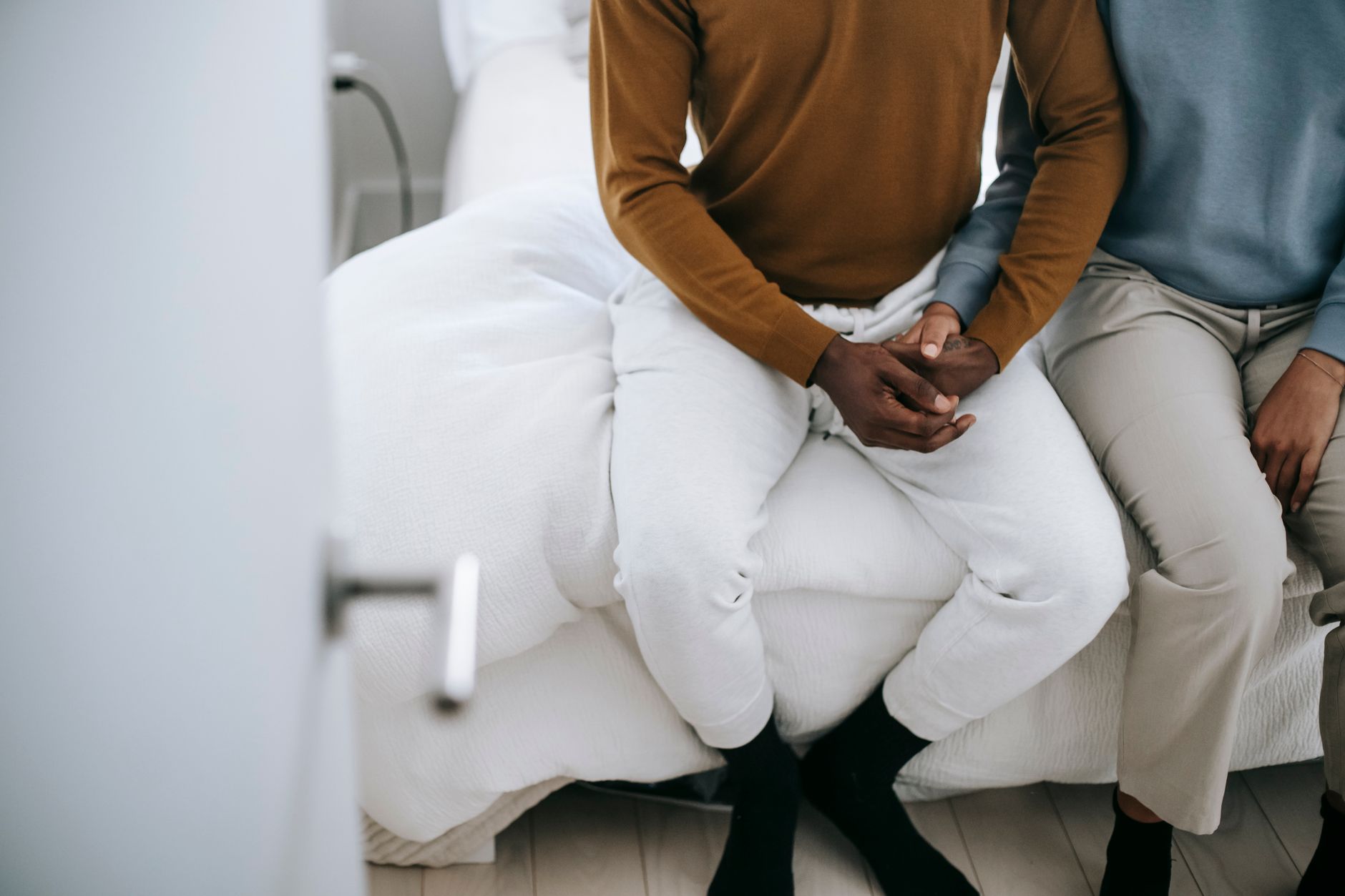
Autistic adults have intimate lives, sex lives, and relationships, in roughly the same numbers as anyone else. What differs is the fit between autistic ways of being and the inherited dating-and-sex script, which was written for a neurotype that processes social information differently. The mismatch isn't a deficit on the autistic side. It's a translation problem with consequences for both partners.
This piece is for autistic adults and the people who partner with them. It assumes adult diagnosis, self-identification, or anything in between — increasing numbers of adults are recognising autism in themselves later in life, often after years of confusion about why intimacy felt harder than the world said it should.
The inherited script doesn't fit
The standard intimacy script — flirting through subtext, reading bedroom cues, intuiting what a partner wants without words, knowing when to pivot from talking to touching — relies on real-time interpretation of social signals that autistic brains process differently. Not worse, not less, just differently.
Common patterns:
- Flirtation that uses indirect language gets missed or feels exhausting to decode
- Subtle non-verbal cues (a glance held a beat too long, a knee touched briefly) don't register as the loud signals neurotypical partners think they're sending
- Surprise touch can be aversive even when wanted in principle
- Spontaneity that everyone else seems to enjoy can feel destabilising
- The "atmosphere" or "vibe" that's supposed to set up sex sometimes does the opposite — too much sensory input, not enough specifics
- Reading a partner's pleasure feedback during sex can be hard when the feedback is non-verbal
None of this means autistic people can't have great sex. It means the path to it usually involves making explicit what the neurotypical script keeps implicit.
Sensory needs are intimate needs
One of the most underdiscussed aspects of autistic intimacy: the body's sensory profile is doing serious work all the time, and sex is a sensory event.
Autistic sensory profiles vary widely, but common factors that affect intimacy:
- Touch sensitivity: certain textures (sweat, lubricant residue, latex), pressures (light tickle vs firm pressure), or areas (necks, backs, feet) can be either deeply pleasurable or instantly intolerable
- Sound: a partner's breathing, a creaky bed, music in the background, sex sounds — any of these can either ground or overwhelm
- Smell: scented lubricants, perfume, body odour — can be hyper-noticeable
- Temperature: cold sheets, hot rooms, sweaty skin contact — bigger factors than neurotypical partners often realise
- Light: full lights, candle, dark — pick what works, not what looks like a film
- Proprioception: some autistic people need firm pressure or weight to feel grounded; others need lightness to avoid feeling trapped
Building a sensory-friendly environment isn't a workaround — it's a precondition for the body to relax enough for arousal. A dim lamp, a fan for white noise, sheets in a tolerable texture, scent-free lubricant — small changes, big effects.
Masking interferes with arousal
Many autistic adults have spent years masking — performing neurotypical responses to fit in. Masking takes effort. Effort interferes with the nervous-system state that arousal requires.
Within an intimate relationship, masking has a cost. If you're working hard to seem fluent in flirtation, to react to bedroom cues with the right facial expression, to perform pleasure in legible ways, you're allocating cognitive load away from the actual experience. Sex becomes a performance of being-a-good-partner instead of an embodied event.
The hard but valuable work: dropping the mask in private with a partner who has earned the unmasked version. This often means the autistic person being more direct, less performative, more openly stimming, more openly needing breaks. It also means the partner accepting the difference between social autistic-presentation and home autistic-presentation.
Communication that actually works
Indirect communication is hard. Direct communication is genuinely easier — for autistic people and, in fact, for most people.
Some specific shifts:
- "Do you want to have sex tonight?" works better than escalating physical hints
- "I want you to do X, like this" works better than expecting the partner to read body language
- "That's not working, can we change to Y" works better than enduring something uncomfortable
- "I need a minute" works better than dissociating and continuing
- Pre-discussed signals — colours, traffic-light system, agreed words — work better than relying on real-time facial-expression reading
Many autistic-neurotypical couples report that adopting more autistic communication styles improved sex for both partners. The neurotypical partner often had needs they were also failing to articulate clearly.
Routines and predictability are not unsexy
The cultural script treats spontaneous sex as the gold standard and routine sex as a sign of failure. For many autistic people, the inverse is true. Knowing roughly when sex might happen, having a predictable transition into it, not being surprised — these create the safety the body needs to be aroused.
Practical patterns:
- A weekly time when sex is "available" (not mandatory) can lower the anxiety of not-knowing-when
- A pre-sex routine — shower, pyjamas off, lights down, music chosen — creates a transition the nervous system can use
- Knowing the rough shape of an encounter (what's likely to happen, what's off the table this time) lowers cognitive load and frees attention for sensation
None of this precludes spontaneity entirely. It just means spontaneity isn't the only mode, and being scheduled isn't a failure.
Special interests can be intimate
Autistic special interests — the deep, sustained engagements with specific topics — are part of how many autistic people relate to the world. In intimacy, this matters.
An autistic person sharing their special interest with a partner who genuinely engages with it is sharing a deep part of themselves. Partners who treat the special interest as a quirk to tolerate are missing that. Partners who genuinely become curious about whatever it is — even if it's something they wouldn't have chosen on their own — are doing something profoundly intimate.
Reverse direction also matters: autistic partners often need to learn to ask about a partner's interests with the same depth they'd want for their own.
Eye contact, kissing, and the things that don't always work
Some specific things many autistic adults find harder than the script assumes:
- Sustained eye contact can be intense to the point of distress. Sex with eye contact "as the standard of intimacy" doesn't work for everyone — and that's fine.
- Kissing with tongue can be sensory overload. Closed-mouth kissing, neck kissing, or limited kissing are real preferences, not lesser ones.
- Pillow talk immediately after sex can be too much input when the nervous system is already saturated. Quiet recovery time, then talking later, often works better.
- Cuddling for extended periods can range from deeply regulating to actively distressing depending on the day.
None of these are personal rejections. They're sensory data. The relationship that makes room for them — instead of grading the autistic partner against a neurotypical template — works better for both people.
Sex when meltdowns or shutdowns are nearby
Autistic adults know this rhythm. After a draining day, a sensory-heavy event, or a social marathon, the nervous system is depleted. Trying to have sex in that state often goes badly.
Better signals to track:
- Is the body settled or buzzing?
- Has there been recovery time after the day's input?
- Is the environment under control sensorially?
- Is the autistic partner masking right now? If so, sex usually fails.
"Not tonight, the day was loud" is a complete sentence and a useful one.
For partners of autistic people
A short list:
- Take direct communication as a gift, not as flatness or coldness
- Don't grade their bedroom behaviour against neurotypical expectations
- Believe their sensory reports — if they say something is too much, it's too much, even if it seems mild to you
- Don't make their autism your story
- Notice the difference between unmasked autistic intimacy (often more genuine) and masked performance (often more familiar but less honest)
- Be patient with transitions; expect more time between activities
- Ask explicit questions; don't expect mind-reading in either direction
For autistic people in relationships
- You don't owe anyone an unmasked version of yourself you're not ready to share — but you also don't owe yourself a relationship where you have to mask all the time
- Direct requests are not rude; they're efficient
- Your sensory profile is real data, not a problem to overcome
- Routine is not romance failure
- You can have rich intimate life — many autistic people do
- Therapists who understand autism in adults make a substantial difference; SACAP-registered psychologists with neurodivergent specialisations exist and are worth seeking out
The bottom line
Autistic intimacy works when it's built on autistic terms instead of imported from a script written for someone else. Direct communication, sensory awareness, predictability where it helps, and partners who don't grade you against a neurotype that isn't yours — these aren't accommodations. They're the conditions for the relationship to actually be intimate.
The intimacy that develops when an autistic person feels truly safe to drop the mask is often deeper, more honest, and more specific than the cultural script suggests intimacy can be. That's worth the translation work it takes to get there.