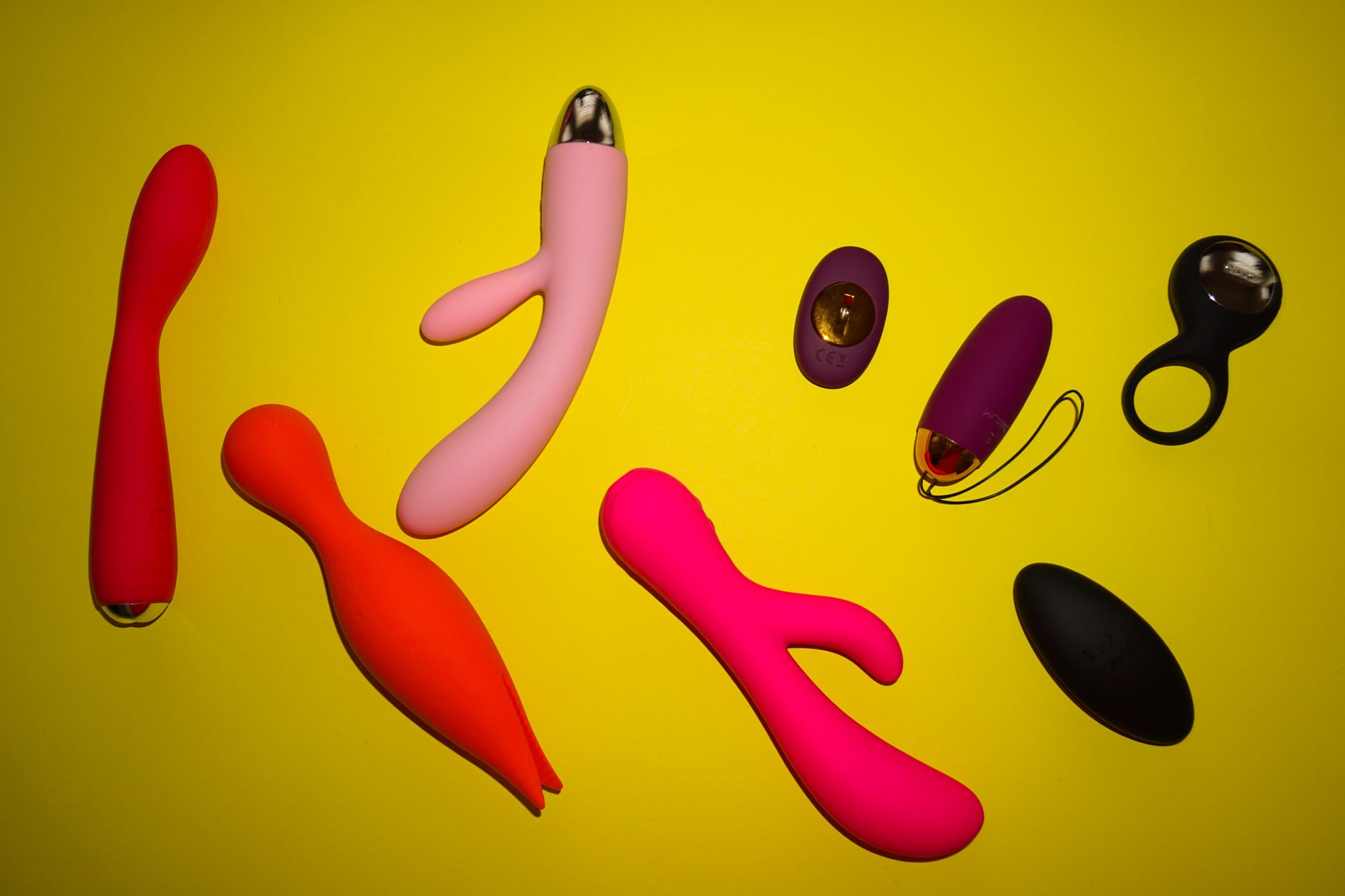
"Couples' toys" is a marketing category that hides a wide range of quality. Some are genuinely useful additions to partnered sex; others are awkward gimmicks that get used once and end up at the back of the drawer. The difference is usually obvious once you know what to look for.
Here's the honest sort.
What makes a couples' toy actually work
The toys that survive in actual use share a few traits:
- They enhance, rather than replace, the physical contact between partners
- They don't require so much setup that they kill momentum
- They're comfortable for both partners (not just one)
- They're durable, easy to clean, and made of body-safe material
- They don't feel like a third party in the bed
Category 1: The wearable couples' vibrator
The category leader is the We-Vibe Chorus and similar — a U-shaped silicone toy that goes inside one partner with one end against the clitoris and the other end inside the vagina. The penetrating partner thrusts as normal; the toy stays in place and vibrates against both bodies.
What makes this work:
- Both partners feel the vibration during penetrative sex
- The receiver gets clitoral stimulation that penetration alone usually doesn't provide — significantly increasing the likelihood of orgasm during partnered sex
- Hands-free for both partners
- Remote controllable, sometimes via app
Caveats: the fit varies by anatomy. Some bodies hold it perfectly; others have it shift during sex. Worth trying with the option to return if your retailer allows. Quality matters here — the cheap copies don't grip and slip out constantly.
Variants
- Lelo Tiani — similar concept, different shape, generally good
- We-Vibe Sync — adjustable to fit different anatomies, slightly more popular than the Chorus for that reason
- Generic dupes — usually disappointing; the design has been hard to replicate well at lower price points
Category 2: The cock ring with vibration
A vibrating cock ring sits at the base of the penis and presses a small vibrator against the partner's clitoris during penetrative sex. Simpler than the wearable category, often cheaper, and surprisingly effective.
What it does:
- Maintains erection slightly (the ring effect — rings without vibration also do this)
- Adds clitoral stimulation during penetration
- Easy to use and remove
- Both partners feel the vibration to some degree
Quality versions: We-Vibe Pivot, Lelo Tor 3, Hot Octopuss Atom Plus. Cheap versions exist but the motors are usually weak and the rings stretch out quickly.
Category 3: The hands-free clitoral toy during penetrative sex
A small clitoral vibrator (sometimes a sonic/air-pulse toy) used during partnered penetrative sex specifically to provide stimulation that penetration alone doesn't. Not a "couples toy" in the wearable sense — but functionally, it transforms partnered sex for many couples.
The Womanizer Duo, Lelo Sona, and similar work for this. Used during penetration, they provide the clitoral stimulation many people need to orgasm during partnered sex.
Why this matters: the orgasm gap (the well-documented difference in orgasm frequency between partners with vulvas and partners with penises during partnered sex) is largely about clitoral stimulation. Adding a hands-free clitoral toy during penetrative sex closes most of that gap for most couples.
Category 4: Toys that change the dynamic
This category is broader and more about novelty than function. Examples:
- Blindfolds (extremely cheap, surprisingly impactful)
- Restraints (Velcro cuffs, soft ties — the entry-level kink toolkit)
- Massage candles (lit, melt into oil, double as warm massage)
- Temperature toys (glass dildos warmed or cooled in water)
- Sensory tools (feathers, soft brushes, ice)
None of these are vibrators or strap-ons. They change the texture of the encounter without requiring much technical use. The blindfold in particular punches above its weight — for ~R150, it transforms the sensory dimension of an encounter.
What to skip
The categories that mostly disappoint:
"Couples kits" with random assortments
The bundles of "10 toys for couples!" usually contain one decent vibrator and nine items that nobody actually uses. Buying individually is cheaper and better.
Penis sleeves that "improve length and girth"
Most are awkward, uncomfortable, made of cheap material, and the marketing claims are exaggerated. There are some decent silicone sleeves out there, but the category is over-hyped.
Sex furniture from the standard adult store catalogue
Wedge pillows are useful and not gimmicky (the Liberator wedge is a classic for good reason). The "sex sofa" or "sex swing" category is mostly for very specific preferences and rarely lives up to the marketing.
Apps and "smart" features that promise to revolutionise your sex life
Most apps are buggy, the long-distance features rarely work as promised, and the data privacy implications are real. Toys with apps can be fine; the app shouldn't be the reason you buy.
Anything described as "for the boyfriend who wants to surprise her"
Marketing red flag. Toys that work in long-term relationships are usually chosen by both partners after a conversation, not surprises.
How to actually introduce a toy
The conversation matters more than the toy. Things that go well:
- Frame it as adding, not fixing. "I'd love to try this together" lands better than "this would help with X problem."
- Watch the reviews together. Picking a toy is a fun thing to do together; arriving with one already chosen sometimes feels like a verdict.
- Try it casually, not as event. Building a big production around the first use puts pressure on the toy to deliver, which it usually can't bear.
- Give it more than one try. First-time toy use is often awkward — the angle's wrong, the timing's off, you laugh. The second and third time tend to be better.
The conversation that gets toy use stuck
If one partner suggests a toy and the other hesitates, the underlying concerns are usually:
- Worry that "I'm not enough"
- Discomfort with the visual or feel of toys generally
- Religious or cultural background that frames toys as not okay
- Past bad experiences (rushed, poorly chosen, painful)
Each of these has different conversations attached. The "I'm not enough" worry is the most common and is best addressed honestly — the toy doesn't replace you, it adds a dimension that hands and bodies don't naturally provide. Vibration in particular is something the human body just doesn't reproduce.
The bottom line
The couples' toys that actually work are mostly in four categories: wearable vibrators (We-Vibe Chorus type), vibrating cock rings, hands-free clitoral toys used during penetration, and dynamic-changers like blindfolds and restraints. The "kits" and gimmicky items are mostly disappointing.
Quality matters more than novelty. A well-made silicone toy used regularly beats a drawer full of cheap experiments. The conversation between partners about what to try is usually the part that does most of the work.