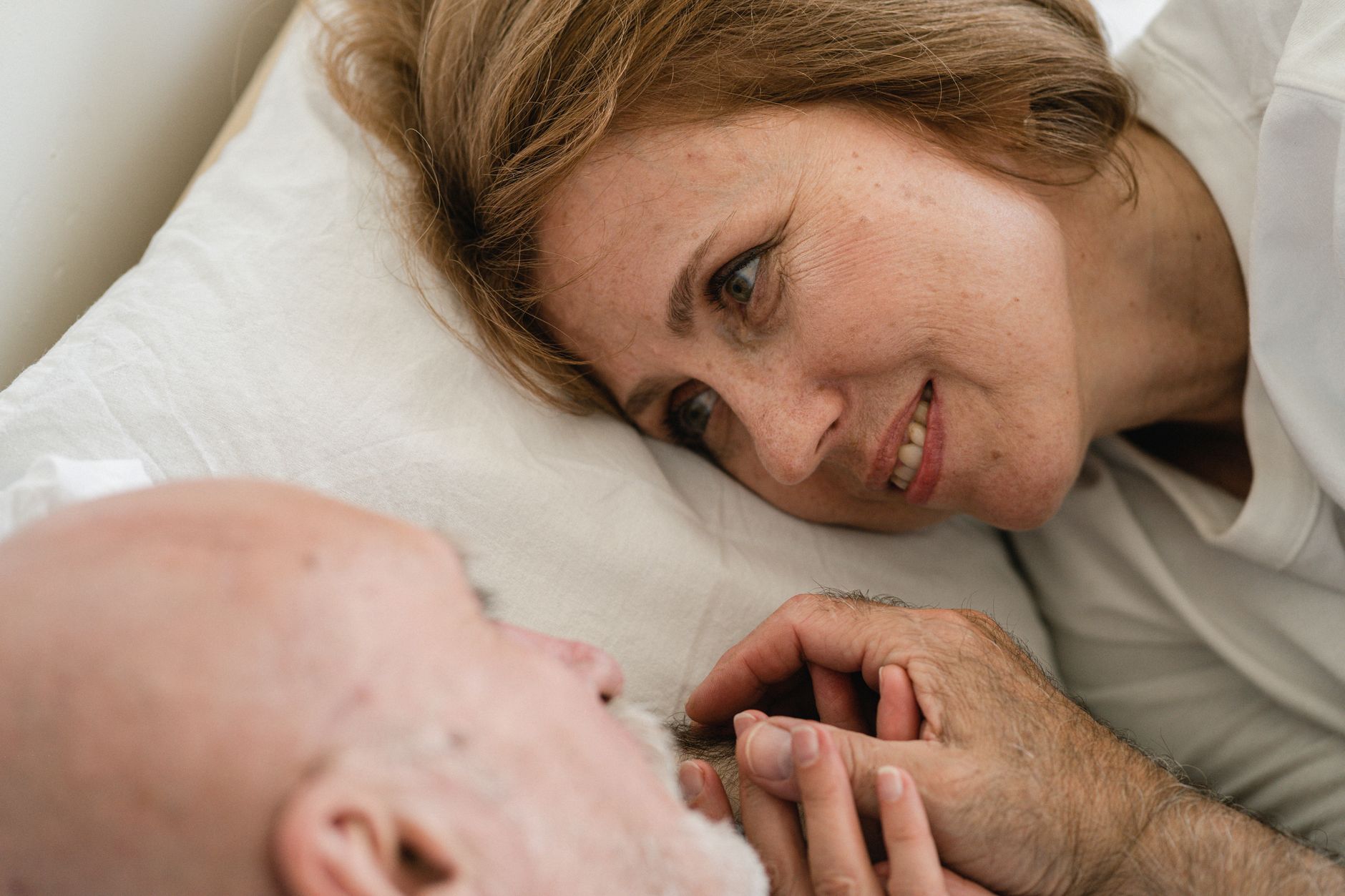
Most people who lose their sex drive blame themselves first — their relationship, their age, their attractiveness, their willpower. The honest physiological answer is more often boring: their cortisol is high, their stress system has been running for too long, and the same hormonal machinery that handles stress is now actively suppressing the machinery that handles desire. Understanding the axis changes how you treat it. You don't fix this with effort. You fix it by giving the system permission to stand down.
Here's what's actually happening, and what genuinely turns it around.
The HPA axis and where sex hormones sit
The hypothalamic-pituitary-adrenal (HPA) axis is the chain that turns a perceived stressor into cortisol in your bloodstream. The hypothalamus signals the pituitary, which signals the adrenal glands, which release cortisol. In acute stress this is useful — it mobilises energy, sharpens attention, prepares the body for action.
In chronic stress, three things happen that matter for libido:
- Cortisol stays elevated. Long-term high cortisol disrupts sleep, mood, memory, immune function, and metabolic health.
- Sex hormone production drops. The adrenals and gonads share precursor molecules. When the body is making a lot of cortisol, it has fewer building blocks left for testosterone, oestrogen, and progesterone. This is sometimes called "pregnenolone steal" — a contested term in academic medicine but useful as shorthand.
- The brain deprioritises reproduction. Chronic stress signals to the hypothalamus that conditions are unsafe for reproductive activity. The signals that drive ovulation, sperm production, and libido are turned down deliberately.
The system is doing its job. From an evolutionary standpoint, a body that's been running from threats for months is not a body that should be making babies. The libido suppression is a feature, not a bug.
What chronic stress looks like in the bedroom
The patterns are consistent across populations:
- Lower spontaneous desire — sex doesn't come to mind on its own
- Slower or harder-to-reach arousal even when in the right setting
- Difficulty staying present during sex; mind wandering to tasks or worries
- Reduced lubrication or erectile firmness despite intact attraction
- Less satisfying orgasms or orgasms that feel further away
- Resentment about sex when initiated, even by a partner you love
- Falling asleep instead of having sex even when you'd planned to
If three or more of these are recent and your life has been stressful, cortisol is the prime suspect.
What counts as "chronic stress" in this context
It's not always the dramatic version. The HPA axis registers any of these as ongoing threat, even when you've stopped consciously feeling stressed:
- Workload that consistently exceeds capacity for months
- Caregiving responsibilities (children, elderly parents, ill partners)
- Financial pressure, even at moderate levels, when sustained
- Relationship conflict that simmers without resolution
- Chronic poor sleep (under 6 hours regularly)
- Chronic underfueling — eating less than the body needs to function
- Long-term low-grade illness or pain
- Loneliness and lack of close social contact
- Frequent low-grade alcohol use as a wind-down tool
- Doom-scrolling news patterns that keep the threat system stimulated
Many people whose libido has cratered are surprised to count up the layers and realise they've been running an HPA-axis-overdrive lifestyle for two or three years without naming it as such.
What does and doesn't lower cortisol over time
Things with solid evidence
- Sleep. The single biggest cortisol regulator. Seven-plus hours, consistent timing, dark room. People often try a dozen things before fixing sleep, when sleep was the answer.
- Walking outdoors, especially in the morning. Light exposure regulates the cortisol curve so it peaks in the morning and falls in the evening. Disrupted curve patterns are common in chronic stress and respond well to morning sun.
- Aerobic exercise at moderate intensity. Acutely raises cortisol; chronically lowers baseline. Three to five sessions weekly is the sweet spot. Excessive volume tips back into elevation.
- Slow-paced breathwork. Five to ten minutes of breath patterns that lengthen the exhale (4-second in, 8-second out, for example) measurably lowers cortisol within a session and over weeks.
- Social connection. Time with people who don't drain you. Co-regulation through real human presence is one of the strongest cortisol-lowering inputs available, and one of the most under-used.
- Reduced alcohol. Alcohol disrupts sleep architecture and elevates cortisol the next day. Cutting from daily to twice-weekly often improves the curve within a fortnight.
- Cognitive distance from the stressor. Therapy, journalling, or regular processing time. The stressor matters less than your relationship to it.
Things with weaker or mixed evidence
- Adaptogens (ashwagandha, rhodiola). Some clinical trials show modest cortisol reduction; not all replicate. Probably useful for some, not magic.
- Cold exposure. Acutely raises cortisol; chronic effects are unclear. Not a primary intervention for stress-related libido.
- Magnesium. Helps sleep quality in deficient people, which indirectly helps cortisol. Direct stress-cortisol effects are modest.
- Meditation apps. Useful for some, ignored by others. The effect comes from the practice, not the app.
Things that quietly make it worse
- Doom-scrolling, especially before bed
- Caffeine after 2pm
- Skipping meals or chronically under-eating
- Trying to "push through" sleep deprivation with stimulants
- Treating exercise as another stressor (excessive volume, undereating around it)
- Working in bed
- Reading work email after hours
Why "just relax" doesn't work
Telling a chronically stressed person to relax is like telling a sprinting horse to stand still. The system has built physiological inertia in the activated direction. What works is repeated, small, predictable cues that the threat is over — many of them, daily, for weeks.
This is why a single weekend off does almost nothing for cortisol-driven libido suppression but four weeks of consistent sleep, walks, and reduced alcohol does.
The libido return curve
When chronically stressed people address the underlying axis, libido tends to come back in a particular order:
- Mood lifts first — usually within 1-3 weeks
- Energy follows — 2-4 weeks
- Sleep depth and morning alertness improve — 2-6 weeks
- Spontaneous desire begins to flicker back — 4-8 weeks
- Arousal responsiveness fully returns — 6-12 weeks
People often quit at week three because libido hasn't yet returned. It's worth knowing the curve. Desire is the last thing to come online because the body wants to be sure the stressor has actually receded before reopening reproductive function.
When to involve a clinician
See a doctor if:
- Stress symptoms include weight gain primarily around the abdomen, easy bruising, purple stretch marks, or muscle weakness — Cushing's syndrome, although rare, mimics chronic stress and needs ruling out
- You've had thyroid symptoms (fatigue, hair changes, temperature intolerance, weight changes) — thyroid and cortisol systems interact
- Sleep won't normalise despite weeks of effort
- Mood symptoms are serious or persistent
- Sexual function symptoms include erectile dysfunction in men under 40, which deserves investigation independent of stress
For most chronically stressed people, formal cortisol testing is unhelpful — single time-point measurements vary widely, and the interventions are largely the same regardless. The exception is when symptoms suggest a specific condition.
A four-week reset
If your libido has been off and stress is the obvious suspect, the highest-yield month looks like:
- Sleep window: same lights-out time within a 30-minute window seven nights a week. No screens for the last 30 minutes.
- Morning walk: 15-20 minutes outside, ideally before 9am, daily.
- Alcohol cap: two drinking days per week maximum.
- Caffeine cutoff: nothing after 2pm.
- Movement minimum: three sessions weekly, moderate intensity, none destructive.
- One slow-breath session daily: 5-10 minutes, exhale longer than inhale.
- One real social contact daily: in person, on the phone, voice not text.
- One containment of the stressor: a phone-off hour, a no-email weekend, a therapy session, a hard "no" to one demand.
Most adults who do this honestly for four weeks notice mood and energy by week two and the first flickers of libido by week four.
The bottom line
Chronic stress is one of the most under-recognised causes of low libido in otherwise healthy adults. The mechanism is real — cortisol elevation, sex hormone suppression, deprioritised reproduction. The fix is unglamorous: sleep, light, movement, less alcohol, real connection, distance from the stressor. Done consistently, it works. Done sporadically, it doesn't.
The desire that comes back when the cortisol axis has settled tends to be different from "before" — more present, more available, more grounded. The system that's been allowed to stand down also gets to come back online.
If your stress symptoms are severe or you suspect an underlying medical condition, please see a clinician. Some causes of high cortisol are treatable, and others mimic chronic stress; getting a proper picture is worth the visit.