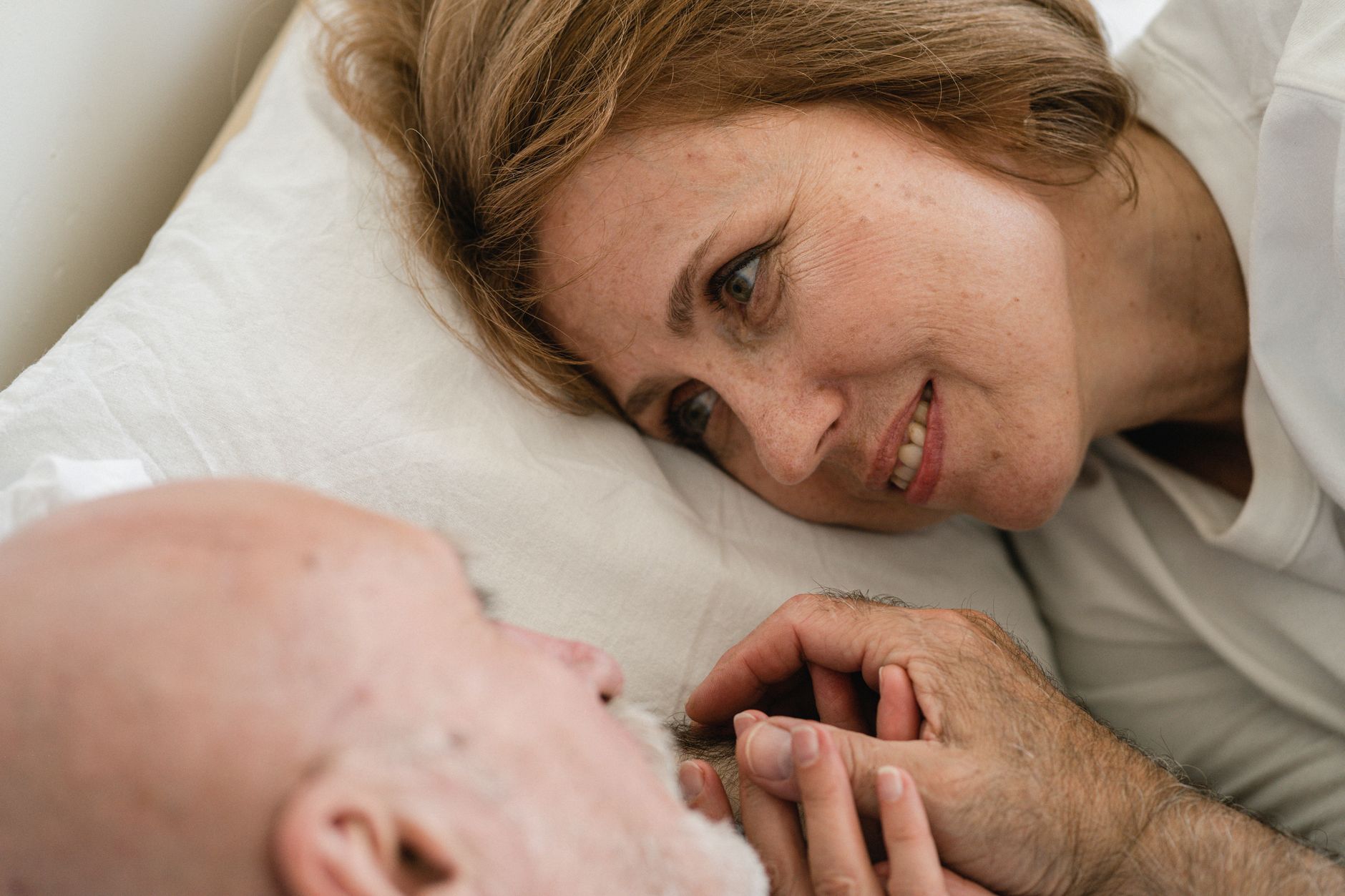
Chronic pain doesn't just sit in one part of you. It reorganises the whole system — sleep, mood, attention, the quiet calculation your body runs in the background about whether anything is safe to enjoy. Sex lives inside that calculation. So when people with chronic pain say their intimacy has gone sideways, they're rarely talking about libido alone. They're talking about a body that has learned, very sensibly, to brace.
This is a guide to building a sex life with that body, not against it. Not a workaround, not a brave-face script. A real one.
Why chronic pain changes sex on so many levels
Pain that lasts longer than three months — fibromyalgia, endometriosis, arthritis, back injuries, neuropathy, long COVID, post-surgical syndromes — does something specific to the nervous system. The brain starts to expect pain even when the original tissue damage has healed or stabilised. Threat goes up. Pleasure goes down. Touch that used to feel good can flip into uncomfortable, and the body doesn't always tell you in advance which way it's going.
On top of the biology, there's the layered weight of:
- Fatigue — most chronic pain conditions burn through energy. Sex requires energy you may not have spare.
- Medication side effects — opioids dampen libido and can affect orgasm; antidepressants used for chronic pain (amitriptyline, duloxetine) come with their own sexual side effects; gabapentin and pregabalin sometimes flatten arousal.
- Body grief — the version of yourself that didn't have to think about all this is still in the room, and missing them is real.
- Partner dynamics — caregiving roles can make erotic ones harder to hold.
None of this means sex is over. It means the old version of sex probably is, and what comes next has to be built on terms that include the pain rather than ignore it.
The pacing principle
People with chronic pain tend to live in two modes — push through, then crash. Sex inherits this pattern unless you actively interrupt it. The push-through version is "I felt okay this afternoon so let's do everything tonight," followed by three days flat. The pacing version is small, sustainable, repeatable.
Practical pacing for intimacy:
- Plan around your best hour, not your average hour. Most chronic pain has a daily rhythm. Notice yours. For some people it's mid-morning after coffee and stretching. For others it's the warm window after an evening bath. Aim sex at that hour, not at habit-bedtime when you're spent.
- Shorter and more often beats long and rare. Twenty minutes of slow, present touch twice a week is better than the marathon you keep cancelling. Your nervous system reads frequency as safety; rarity reads as loaded.
- Pre-load with warmth. Heat packs, warm baths, gentle movement. Cold tissues hold pain harder; warm ones let go.
- Build in the comedown. Cuddling, water, a snack, lights low. The nervous system needs a dismount, not a hard stop.
Positions and props, plainly
Most generic sex advice assumes a body that can comfortably hold weight, twist, and move freely. If yours can't, the standard menu is mostly wrong for you. A few principles instead:
- Side-lying is your friend. Spooning positions take pressure off the spine, hips, and shoulders. Works for penetrative and non-penetrative sex, solo and partnered.
- Pillows are equipment. A wedge under the hips, a pillow between the knees, a rolled towel under the lower back. Liberator-style wedges are worth the spend if you have ongoing positional pain.
- Receiving with support is underrated. Lying on your back with knees bent and a pillow under each thigh, partner kneeling beside or below you, often produces deeper pleasure with less load than any "active" position.
- Toys reduce labour. A wand vibrator means a partner doesn't have to sustain pressure or speed. A small, weighted bullet means you don't either. This is not a compromise — it's a tool for a body that should not be doing aerobic work to enjoy itself.
- Lube generously. Pain conditions and their medications frequently dry tissues. A thicker silicone or hybrid lube reduces friction-related pain at the threshold.
Communication that doesn't kill the mood
The fear most chronic-pain partners admit privately: I don't know how to ask if it hurts without making everything clinical. The fear from the partner with pain: I don't want every encounter to become a medical conversation, and I don't want to lie either.
A few phrases that tend to work in real time without flattening the erotic:
- "More of that." Positive direction, no flag-waving.
- "Slower." One word. Doesn't stop anything.
- "Switch." Code for change position without explaining why.
- "Pause" instead of stop. A pause is a return; a stop feels like a verdict.
- "Let me move you." If you're the partner of someone with pain, taking initiative on small repositions removes the labour from them.
The bigger debrief — what worked, what didn't, what you want next time — happens later, fully clothed, ideally over tea, not in bed.
The freeze under the freeze
Bodies in chronic pain sometimes go quiet not because they're not interested but because they've learned to hold still as a protective strategy. You'll know this is happening if you notice that you can want sex in your head and feel nothing in your body, or that touch you used to enjoy now registers as far away.
This is a nervous system response, not a libido problem. The intervention is not "try harder." It's:
- Slow down further than feels reasonable.
- Spend a long time on touch that has no destination — back, scalp, forearms, the edges of you that aren't usually erotic.
- Add breath. Long exhales. Together if you can.
- Notice without fixing. The body unfreezes on its own clock once it stops being asked to perform.
If freezing is a regular feature, working with a somatic-trained therapist or pelvic health physiotherapist can speed the process meaningfully.
When the pain is in the parts
Genital and pelvic pain — vulvodynia, vestibulodynia, endometriosis, pudendal neuralgia, post-surgical pain — deserves its own conversation with a clinician who actually treats it. Generic GP advice is often inadequate. Look for pelvic health physiotherapists, gynaecologists with chronic pelvic pain experience, or sexual medicine specialists. In South Africa, the Pelvic, Obstetric and Continence Physiotherapy Group keeps a directory.
While you're getting the medical side sorted, the principle of removing penetration from the centre is worth holding. Pleasure is not synonymous with insertion. External, oral, manual, and toy-based pleasure can be a complete sex life on its own, indefinitely, without anyone losing anything.
For partners
If your partner has chronic pain and you don't, three things matter more than any technique:
- Trust their report. If they say it hurts, it hurts. If they say today is a no, today is a no. Arguing with the pain doesn't move the pain; it just makes them lonelier inside it.
- Don't let sex carry the whole intimate load. Couples who keep daily affection alive — touch, attention, small rituals — find sex easier to return to when the body allows it. Couples who only touch when sex is coming end up with a brittle either/or.
- Take care of your own body. Caregiver burnout is a real thing and it bleeds into the bedroom. Movement, friends, a therapist, your own pleasure — none of these are betrayals of your partner.
The bottom line
A body with chronic pain can have a rich sex life. Not the one it had before, necessarily. A different one — slower, more specific, less performative, often more honest. The work is in letting the old version go without letting the whole project go with it.
Pace it. Pad it. Talk in short phrases. Spread pleasure out beyond penetration. Get the right specialists on your side. And keep going. The body that hurts is still a body that can be loved well, and is.
If chronic pain is interfering significantly with your intimate life, please consider working with a clinician who treats both the pain condition and its sexual impact — a pelvic health physiotherapist, sexual medicine doctor, or a therapist with chronic illness experience. The right team makes a real difference.