Pelvic organ prolapse is one of those diagnoses that arrives quietly. You feel a heaviness by the end of the day. Something that wasn't there before now is. You ask your GP and the word turns up — and suddenly the internet shows you a thousand worst-case stories. The reality is calmer. Prolapse is extremely common, often manageable without surgery, and not the end of your sex life. Here is what you actually need to know.
What it is, in plain terms
Your pelvic organs — bladder, uterus, rectum — sit inside a sling of muscle, ligaments and connective tissue called the pelvic floor. When that support weakens, organs can shift downward and press into the vaginal walls, sometimes far enough to be felt or seen at the opening.
The main types named by the affected organ:
- Cystocele. The bladder bulging into the front wall of the vagina. Most common type.
- Rectocele. The rectum bulging into the back wall of the vagina.
- Uterine prolapse. The uterus descending into the vagina.
- Vaginal vault prolapse. The top of the vagina dropping after a hysterectomy.
- Enterocele. Small intestine pressing into the vaginal wall, often top-back.
Prolapse is graded 1 to 4. Stage 1 is mild — descent inside the vagina that you may not feel at all. Stage 4 is full eversion, where tissue protrudes outside. Most people who notice symptoms are stage 2 or 3.
How common it actually is
Half of all people who've given birth vaginally have some degree of prolapse if examined carefully. Most don't have meaningful symptoms. Symptomatic prolapse affects somewhere between 3% and 6% of women — though that's almost certainly an undercount because plenty of people never raise it with a clinician. By age 80, the lifetime risk of surgery for prolapse is around 12%.
You are not unusual for having this. You are unusual mostly in that you're talking about it.
What causes it
Prolapse is rarely a single event. It's a slow accumulation of stress on tissues that have a fixed strength budget. The biggest contributors:
- Vaginal childbirth. Especially long second stages, large babies, instrumental deliveries (forceps), and repeated births. Caesarean reduces but does not eliminate risk.
- Menopause. Falling oestrogen thins and weakens vaginal and supporting tissues.
- Chronic intra-abdominal pressure. Years of constipation and straining, chronic cough, heavy lifting at work without bracing, high BMI.
- Connective tissue genetics. If your mother had prolapse, your risk is higher. Joint hypermobility (Ehlers-Danlos and similar) raises risk too.
- Previous pelvic surgery. Including hysterectomy, which leaves the vault less supported.
Symptoms — and what isn't a symptom
The classic picture:
- A sense of heaviness, dragging or fullness in the vagina, usually worse by evening or after standing.
- A visible or palpable bulge at the vaginal opening, sometimes only when you bear down.
- Urinary changes — incomplete emptying, urgency, slow stream, leaking with cough or sneeze. Sometimes the opposite: needing to push the bulge in to start urinating.
- Bowel changes — incomplete emptying, needing to splint (press on the back vaginal wall) to pass stool.
- Sexual changes — friction or pressure differently than before, occasional pain, sometimes a partner noticing the bulge.
- Lower back ache by end of day.
Mild prolapse without symptoms doesn't need treatment. The treatment threshold is "this is bothering me," not the grade on the chart.
What actually helps — in order from least to most invasive
1. Pelvic floor physiotherapy
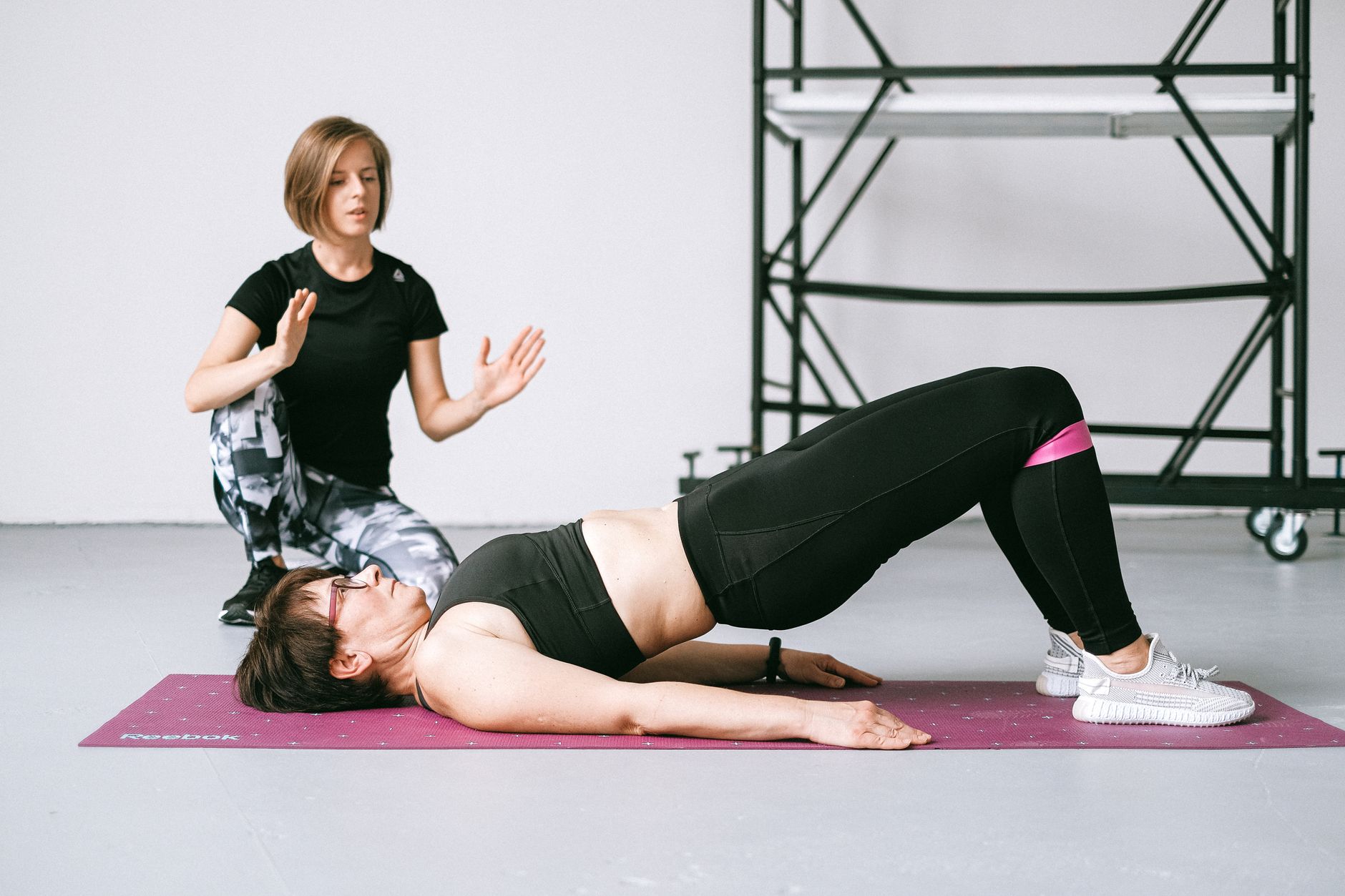
This is the first line for stage 1-2 prolapse and a meaningful adjunct for higher grades. A pelvic floor physio assesses your muscle strength, coordination, and the specific direction of your prolapse, then gives you a programme. Generic Kegel apps are poor substitutes for hands-on (or biofeedback) assessment because around 30% of people doing "Kegels" are doing them wrong — bracing the wrong muscles, holding their breath, or pushing instead of lifting. Twelve weeks of supervised pelvic floor work reduces symptoms in roughly 60-70% of people in good trials.
South African coverage is reasonable in major centres. The Pelvic Health Physiotherapy Group has a clinician finder; medical aids generally cover a course with referral.
2. Lifestyle adjustments that genuinely matter
- Treat constipation aggressively. Hydration, fibre, magnesium if needed. Long straining is one of the worst things you can do.
- Manage chronic cough. If you smoke, this is one more reason to stop.
- Lift with proper bracing — exhale on the effort, don't hold your breath.
- If you're carrying excess weight, even modest reduction (5-10%) reduces symptoms.
- Avoid extreme high-impact training during flare-ups — pivot to low-impact (walking, swimming, cycling) until symptoms settle.
3. Vaginal pessaries
An underused, brilliant device. A silicone ring (or other shape) sits inside the vagina, supporting the prolapsed organ. Fitted by a gynae, removable for cleaning, and for sex if you wish. Around two-thirds of women fitted with a pessary still use one a year later because they work. It's not a "stopgap before surgery" — for many it's the long-term answer.
4. Vaginal oestrogen
For postmenopausal prolapse, low-dose vaginal oestrogen (cream, tablet, or ring) thickens vaginal tissue, improves elasticity, and is often used alongside pessaries or before surgery. Systemic absorption is minimal; safety profile is good even after some hormone-sensitive cancers (discuss with your oncologist). Underprescribed in South Africa relative to international guidelines.
5. Surgery
For symptomatic stage 3-4 prolapse that hasn't responded to conservative measures, surgery is a real option. Two broad routes:
- Native tissue repair. The surgeon stitches your own tissues back together. Lower long-term complication risk; somewhat higher recurrence rate (around 30% over a decade).
- Mesh-augmented repair. A synthetic mesh reinforces the repair. Lower recurrence rate; higher complication risk including erosion and chronic pain. Transvaginal mesh has been pulled from many markets after high complication rates; sacrocolpopexy, an abdominal mesh procedure for vault prolapse, has a much better safety record.
The surgical conversation in 2026 is significantly more cautious than it was a decade ago, and rightly. If surgery is recommended, ask your surgeon: how many of these do you do per year, what's your recurrence rate, what's your complication rate, do you offer non-mesh options, and what does failure look like? A good surgeon answers these clearly.
Prolapse and sex
Most people with prolapse can still have penetrative sex if they want to. Things that help:
- Different positions. Side-lying, woman-on-top with shallower angle, or anything that takes pressure off the prolapsed wall.
- Plenty of lubricant — vaginal walls under pressure get less natural lubrication.
- Vaginal oestrogen if postmenopausal.
- A pessary for support during sex if your gynae recommends a type that stays in.
- Honest conversation with your partner. The bulge can be visible or palpable; partners are nearly always more curious than upset, but only if you tell them what's happening.
Sex doesn't worsen prolapse. Penetration won't push organs further down. The only sexual activity to avoid during a flare is anything causing significant pain.
What this is not
Prolapse is not a moral failing, a sign you've been "doing too much," or proof that your body has betrayed you. It is a structural change driven mostly by biology and life events you didn't choose. Most people manage it without surgery. Almost everyone improves with the right combination of physio, pessary, and oestrogen if relevant. The fear is usually worse than the reality.
See a clinician if
- You can feel or see a bulge that's affecting daily life or sex.
- Urinary or bowel function has changed and isn't improving.
- You have new pelvic pain, bleeding, or skin breakdown over a protruding prolapse — needs prompt review.
- You want a properly fitted pessary or pelvic floor referral.
The bottom line
The quiet news is that prolapse rarely needs surgery and almost always responds to a combination of pelvic floor physiotherapy, smart lifestyle changes, and (where appropriate) a pessary and vaginal oestrogen. The first appointment is the one that closes the catastrophic-internet-tab and replaces it with a realistic plan. Worth booking.