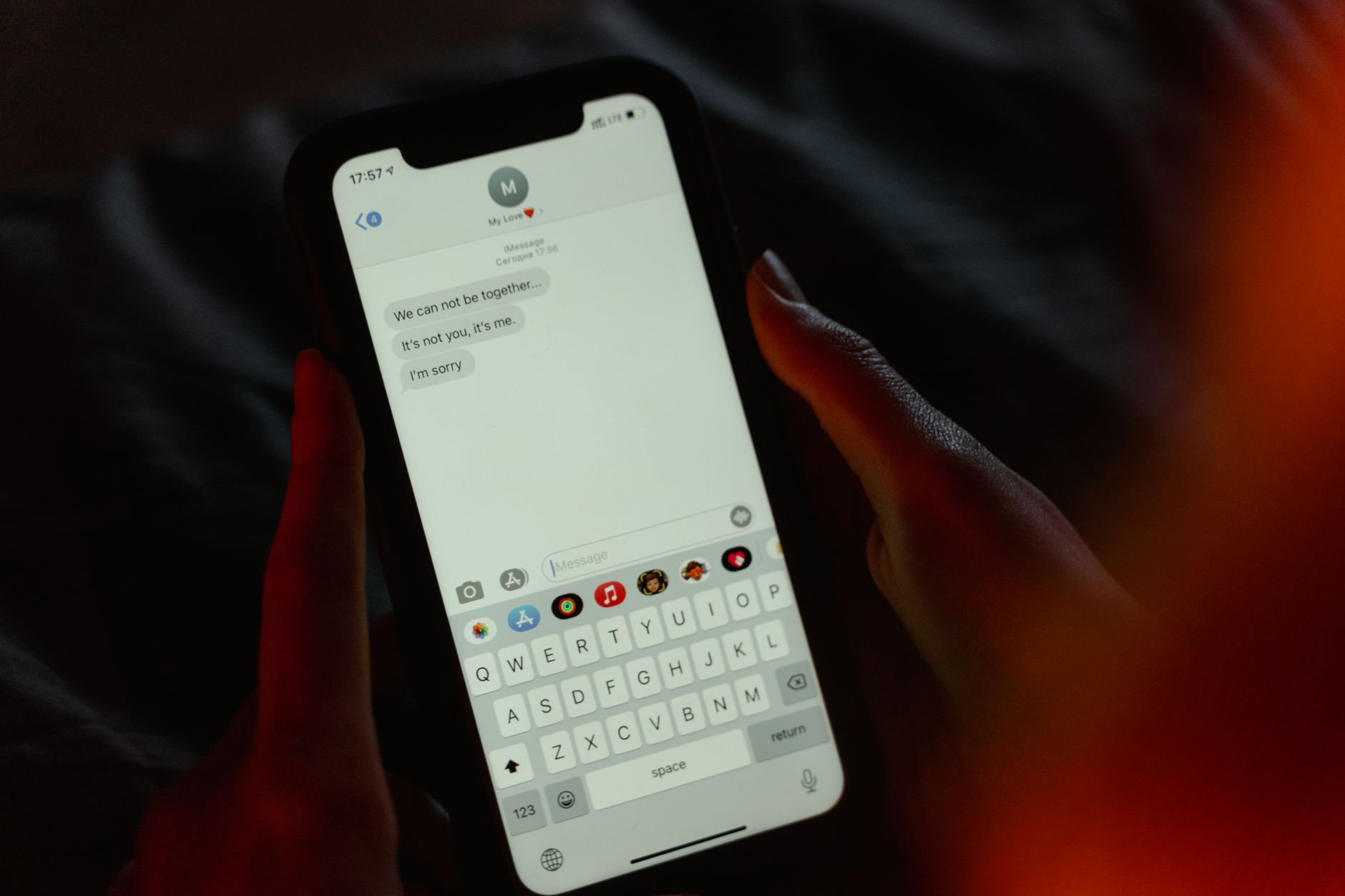
"Micro-cheating" is a term that gets thrown around without much rigour. It's not a clinical category, and a lot of what gets labelled with it is just normal human social behaviour. But the underlying observation is real: certain small behaviours, accumulated over time, do erode trust in a relationship — even when no individual one would count as cheating. This piece is a practical audit of where the line might sit, and how to actually talk about it.
What people mean by it
Micro-cheating usually refers to behaviours that don't cross into a sexual or fully emotional affair, but that involve a meaningful investment of attention, energy, or intimacy in someone outside the primary relationship — often in ways the partner wouldn't be comfortable with if they knew the full picture.
Examples that come up:
- Frequent flirty messages with someone outside the relationship
- Hiding the existence of a friendship or its intensity from your partner
- Sharing intimate emotional content with someone in a way you don't share with your partner
- Removing your relationship status, photos, or markers on social media around a particular person
- Staying in close contact with an ex without your current partner's knowledge
- Late-night messaging that wouldn't comfortably be shown
- Crafting a particular online presence that's clearly aimed at a specific person
- Lying about small things related to time spent with someone
Any one of these in isolation might be nothing. The pattern of several of them, especially with an undertone of secrecy, is what people are pointing at.
The actual test
Forget category arguments. The functional test for whether a behaviour has crossed into something problematic is two questions:
- Would I be comfortable if my partner could see this exchange in full?
- Am I doing or not doing things specifically to keep my partner from knowing about it?
If you answer "yes, comfortable" and "no, not hiding," it's almost certainly fine. If you find yourself flinching at either question, you've got information.
This test isn't perfect — privacy is normal, and not every conversation with a friend is your partner's business. But the pattern of repeated discomfort with what your partner would see, and repeated effort to hide, is the actual signal.
The audit, run honestly
If you want to do this for yourself — not to weaponise it, just to take stock — sit with these questions:
- Is there anyone in your life right now you'd be uncomfortable for your partner to see your full message history with?
- Have you deleted messages, hidden conversations, or used a separate channel for someone outside the relationship?
- Have you met up with someone individually and not mentioned it to your partner, or actively edited the version you told them?
- Have you held back from telling your partner about an interaction because you knew they wouldn't like it?
- Have you presented yourself differently online to someone specific — different photos, different framing of your relationship status — than your reality?
- Are you sharing emotional content (problems, insecurities, intimacy) with someone outside the relationship that you're not sharing with your partner, and is that displacement growing?
None of these are automatic verdicts. They're prompts. A "yes" to one might be entirely innocent in context. Three or four "yes" answers usually mean something is going on that's worth looking at.
What it usually means
People rarely micro-cheat for no reason. The pattern is usually pointing at one of a few things:
An unmet need. Validation, sexual attention, emotional intimacy, being seen as exciting — something you used to get in the relationship and aren't getting now, or never got. The outside attention is a substitute, often unconscious.
An exit ramp the brain is preparing. Sometimes micro-cheating is the early stage of disengagement from a relationship. You're rehearsing a version of yourself that isn't fully partnered. This is worth noticing.
A genuinely unresolved attraction. A specific person you keep returning to, in messaging or attention, even when you tell yourself you'll stop.
A broader pattern of avoidance. Some people use small outside-of-relationship intimacies as a way to take pressure off the primary relationship — diffusing emotional intensity rather than bringing it home.
Each of these calls for different responses. The first asks you to bring the unmet need home. The second asks you to look at whether you really want to be in the relationship. The third asks you to reduce contact and decide. The fourth asks you to look at why home feels too intense to invest in fully.
Your partner's accusations
If your partner has named something as micro-cheating and you don't think it is, you're now in a different conversation than the one this article started in. The question becomes: how do the two of you decide what counts?
The truth is, every couple has a different operating definition. Some couples are entirely comfortable with their partner having close opposite-sex friendships, exes in their lives, flirty banter, occasional dances at parties. Others aren't. Neither standard is wrong. What matters is that both partners actually agree on what the standard is.
Most couples have never had this conversation explicitly. You discover the standard the first time someone gets uncomfortable, and then you fight about whether the discomfort was reasonable, when the actual underlying problem is that you never agreed on the rules.
The conversation worth having:
"What kinds of contact with people outside our relationship are okay with you and what aren't? What about close friendships with people we'd be sexually compatible with? What about exes? What about flirty messaging that's not going anywhere? What about hiding interactions from each other? Where are your real lines, and where are mine?"
This is a calmer conversation when nothing is currently on fire. Have it before you need it.
The "innocent friendship" defence
One pattern worth flagging: when challenged, the person micro-cheating often defends the behaviour as "just a friendship" — and sometimes it is, but the defence often skips the part that matters.
The question isn't whether the friendship itself is wrong. It's whether the secrecy, intensity, or displacement of investment from the partner is a problem. A friendship you'd happily fold into your shared social life is different from a friendship you carefully keep separate. Both might be technically platonic. They have different effects on the relationship.
If your honest answer to "would I tell my partner about this conversation?" is consistently no, the issue isn't whether you're "just friends." The issue is what you're hiding and why.
If you're the partner who senses something
If you're not the one running the audit on yourself but the one who senses something is off, the path forward is harder. A few things worth knowing:
- Your gut is often picking up on something real before your conscious mind can name it
- Snooping rarely produces the conversation you actually need; it produces a fight about snooping
- Stating what you're noticing — calmly, without accusation — opens more space than producing evidence
- "I've noticed you've been more on your phone in the evenings and a bit checked out from us. I'm not accusing you of anything. I'm asking what's going on for you."
If your partner gets defensive in disproportion to a calm question, that itself is information. If they engage honestly, you've just opened a much more productive conversation than an accusation would have.
What to do if you've been doing it
If the audit landed and you've recognised yourself, a few moves are worth making:
- Step back from the contact. Reduce frequency, change the channel, take the relationship out of constant access.
- Sit with what need was being met by it. Bring that need home — directly, in conversation with your partner.
- Decide whether to disclose. If the behaviour was minor and you can credibly stop, you may not need to. If it was significant, ongoing, or your partner is going to find out anyway, telling them yourself is almost always better than them discovering it.
- If you can't stop, get help. A therapist. Not your partner first.
The bottom line
Micro-cheating isn't a real diagnostic category, but the underlying pattern is real: small behaviours, hidden from a partner, accumulating into a slow drain on trust and presence. The actual test is whether you'd be comfortable if your partner saw the full picture, and whether you're working to keep them from seeing it.
Run the audit honestly. Have the conversation with your partner about what your actual rules are before you need to. And if you're already in the pattern, the way out is reducing contact, naming the unmet need, and bringing it home — not arguing about whether what you've been doing technically counts.