There's a single nerve that runs from your brainstem down through your face, throat, chest, and into the gut. It carries about 75% of the parasympathetic nervous system's signals — the ones that tell your body it's safe enough to relax, digest, connect, and be aroused. It's called the vagus nerve, and it's one of the most underrated variables in adult sex lives.
Once you understand what it does, a lot of mysterious patterns about arousal, performance, and pleasure start making sense.
What it does
The vagus nerve is the brain's main highway to most of the body's organs. It carries signals downward (instructions from brain to body) and upward (information from body to brain). It's heavily involved in:
- Heart rate regulation
- Digestion
- Inflammation control
- Mood
- Social engagement signals (face, voice, gesture)
- Sexual response — particularly the parasympathetic activation required for arousal and orgasm
When the vagus is active and engaged, you're in the "rest, digest, connect" state. When it's suppressed, you're either in fight-or-flight (sympathetic dominance) or shutdown (dorsal vagal collapse). Sex requires the first state. The other two states either produce performance-style sex or no sex at all.
Why this matters for arousal
Sexual arousal — for any anatomy — is mostly a parasympathetic event. Erections, lubrication, the smooth-muscle relaxation that opens blood flow to the genitals — these all run on parasympathetic activation. If your nervous system is currently busy with stress, anxiety, or low-grade alarm, the parasympathetic signal can't dominate, and the body can't fully arrive.
This is why high-stress periods correlate with low desire and sluggish physical response. It's why sex after a fight is harder. It's why anxious sex tends to be performance-oriented rather than embodied. The vagus nerve isn't online enough.
Vagal tone
"Vagal tone" is a measure of how active the vagus nerve is at baseline. Higher vagal tone = better parasympathetic regulation, faster recovery from stress, easier access to relaxed states. Lower vagal tone = chronic sympathetic dominance, slow recovery, harder time relaxing into sex.
Vagal tone is partly genetic but largely trainable. People with higher vagal tone tend to:
- Have an easier time arriving in arousal
- Recover faster from sexual disappointments (a missed beat, an unexpected interruption)
- Connect more readily with partners after stressful days
- Sleep better, which compounds the effect
What activates the vagus
The activities that build vagal tone over time and the ones that activate it in the moment:
Slow exhales
The single most reliable vagal trigger. Inhale for 4 counts; exhale for 6-8 counts. The longer exhale activates the vagus directly. Two minutes of this before sex shifts the nervous system measurably.
Humming, singing, chanting
Vibration in the vocal cords stimulates the vagus through the throat. Humming for a minute is genuinely calming. (Also: the soft moaning that happens during good sex is partly the body activating its own vagus.)
Cold water on the face
Triggers the dive reflex, which activates the vagus quickly. Useful for resetting after a stress spike.
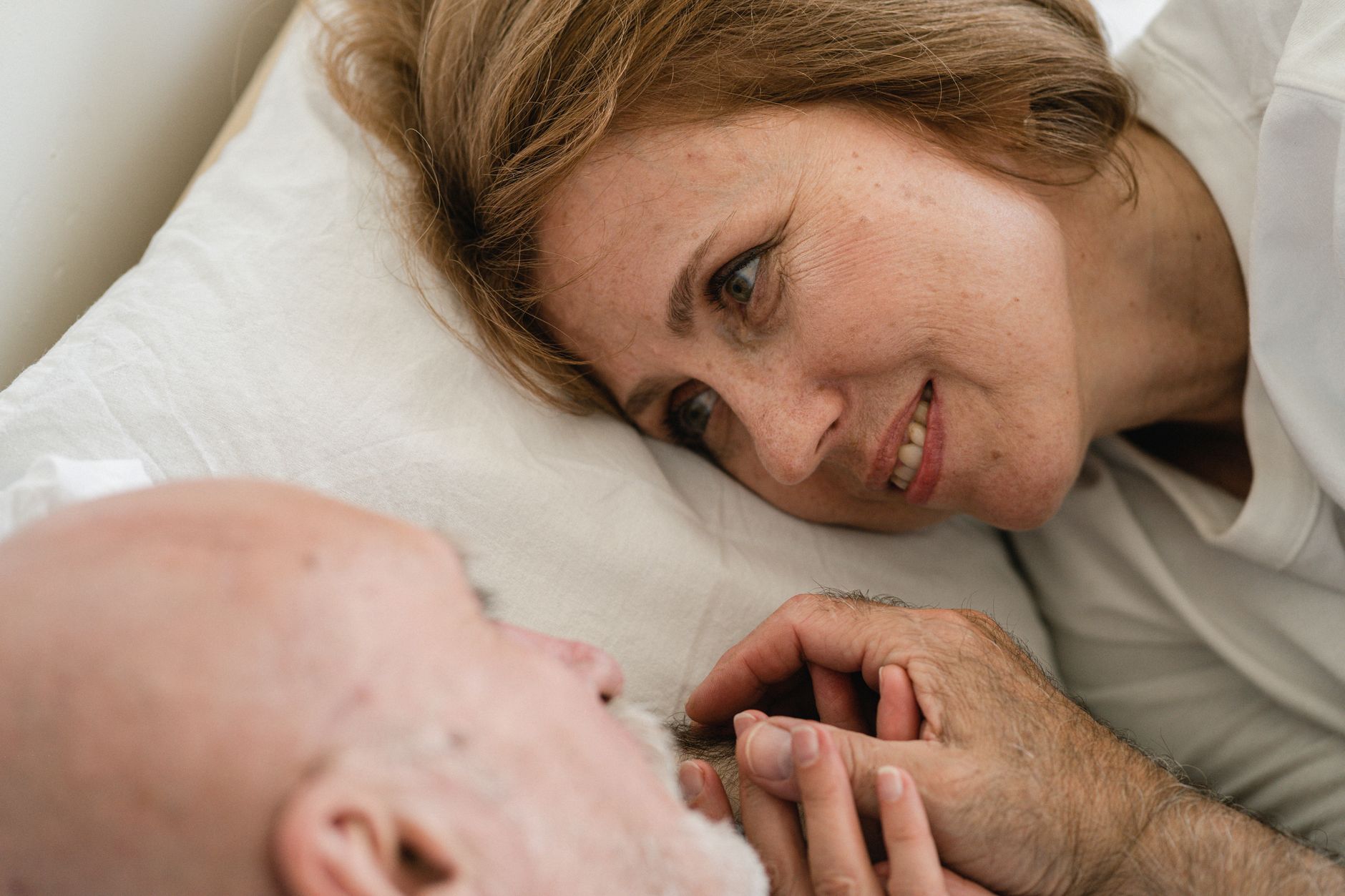
Eye contact
Soft eye contact with someone you trust activates the social engagement system, which is vagally mediated. Couples who maintain eye contact during sex are co-regulating each other's nervous systems whether they realise it or not.
Slow rocking or swaying movement
Calms the system. Why slow dancing feels good; why being held while breathing slowly works.
Cold immersion
Cold showers, ice baths. Builds vagal tone over weeks. Not necessary for everyone, but well-evidenced.
Connection to safe people
Spending time with people who feel safe — laughter, conversation, casual physical contact — activates and tones the vagus. Isolation has the opposite effect.
Sleep
Vagal tone is highest after restorative sleep. (Yet another reason sleep keeps coming up.)
What suppresses the vagus
- Chronic stress and unrelieved demands
- Poor sleep
- Sedentary days followed by sudden alarm spikes
- Unprocessed grief or trauma
- Excessive alcohol or stimulants
- Isolation
- Doom-scrolling and constant low-grade overstimulation
Most modern adult life is mildly vagally suppressive. Which is why so many people report a flat-but-functional sex life — neither broken nor great. The nervous system isn't in a state where greatness is available.
Practical sex applications
Before sex: prime the vagus
Two minutes of slow breathing — done together with your partner if possible — measurably shifts the nervous system. It looks anti-romantic; it isn't. It's how some couples turn middling encounters into present ones.
A warm shower, slow contact while still clothed, putting on calming music — all of these are vagal primers. The cumulative effect is that by the time sex itself starts, both nervous systems are already in a receptive state.
During sex: maintain it
If you find yourself getting tense, distracted, or in your head:
- Slow, audible exhales — let your partner hear them
- Eye contact for a moment
- Pause and connect — a hand on the partner's chest, a breath together
- If you're getting overstimulated and shutting down, slow movement and deeper breathing help
You don't need to stop the encounter to do these. They're integrated.
After sex: recover well
The post-sex window is also vagal territory. Couples who continue contact for a few minutes, breathing slowly together, are co-regulating their way back into integration. Couples who immediately get up, check phones, or rush off keep the encounter from fully completing in the nervous system.
Long-term vagal training
If you want to build the baseline tone:
- Daily breath practice. Five minutes a day of slow breathing. Boring; effective.
- Movement that's rhythmic. Yoga, walking, swimming, dancing. Not high-intensity training (which actually drops vagal tone short-term, even though it has other benefits).
- Singing or humming regularly. Karaoke counts. Singing in the car counts.
- Cold exposure. Cold showers, even briefly. Builds tolerance over weeks.
- Limit overstimulation. Less doomscrolling, more conversation. Less "background TV all day," more silence.
- Connect with people. Real-world contact, regularly.
None of these are mystical. They're just the activities that train the nervous system toward a state where pleasure is available. Couples who have this baseline as a shared norm tend to have better sex than couples who don't.
The polyvagal view of partnered sex
Stephen Porges's polyvagal theory is the framework underneath much of this. The relevant insight for sex: connection requires what Porges calls "ventral vagal" engagement — the calm, present state. Sex from sympathetic activation tends toward urgency or anxiety. Sex from dorsal vagal shutdown tends toward dissociation. Real connected sex needs ventral vagal as the substrate.
Couples who help each other co-regulate — who calm each other down rather than ramping each other up — tend to access this state more reliably. The "calming" partner isn't unsexy; they're vagally generous, and the body learns to trust them.
The bottom line
The vagus nerve is the wiring that decides whether your body can fully arrive for sex. High vagal tone makes arousal easier, presence easier, recovery faster, connection deeper. Low vagal tone makes everything in adult life harder, including sex.
The interventions are mostly free and mostly known: slow breathing, humming, eye contact, sleep, real-world connection, less overstimulation. The catch is that they only work if practised consistently. The good news is that even a few weeks of attention starts to shift the system.
The most underrated sex tip in modern adult life: breathe slower. Most of the rest follows.