Three and a half years after the Dobbs decision, the cleanest summary of global reproductive rights in 2026 is this: the trend is bifurcating. Some countries and regions have liberalised access faster than at any point in modern history. Others have restricted it more aggressively than at any point since the 1970s. The map of who can get a legal abortion in 2026 looks less like a slow march in either direction and more like a polarised checkerboard, with the gap between best-case and worst-case widening every year.
South Africa, on paper and in practice
The Choice on Termination of Pregnancy Act remains, on paper, one of the most permissive abortion laws in the world. First-trimester abortion is available on request. Second-trimester abortion is available on broader grounds than in most countries. Public health facilities are mandated to provide it.
The reality is more uneven. The most consistently cited estimates suggest fewer than half of designated public facilities actually provide abortion services. Conscientious objection by individual practitioners is widespread and not always lawfully managed. Rural access is significantly worse than urban access. Long travel distances and stockouts of mifepristone and misoprostol create de facto barriers in places the law claims to provide access.
The result is a two-tier reality. Urban, middle-class women can generally access legal first-trimester services through public facilities, NGO providers like Marie Stopes, or private practitioners. Rural and lower-income women face a meaningfully different situation, often turning to informal providers who advertise on lampposts and around minibus taxi ranks — services that are unregulated, often unsafe, and sometimes outright fraudulent.
The 2026 picture is one of strong law, patchy delivery, and a growing gap between what the Constitution provides and what the health system actually executes.
The United States, three and a half years post-Dobbs
The post-Dobbs American picture has stabilised into a clear pattern:
- Roughly 14 states have near-total abortion bans with limited exceptions
- Roughly 8 states have early-gestation bans (6 to 15 weeks)
- The remainder have either retained or expanded access, with several enshrining it in state constitutions
- Interstate travel for abortion has become a structural feature of access — more than 1 in 5 procedures in 2025 involved out-of-state patients
- Mifepristone-by-mail through telemedicine has filled significant gaps and is now the dominant method of first-trimester abortion in much of the country
- Several states have enacted shield laws protecting providers serving patients in restrictive states
- Several states have, conversely, attempted to restrict travel or mail-order pills, with mixed legal results
The downstream public-health data, where it's available, is unambiguous: restrictive states show measurable increases in maternal mortality, increases in pregnancy-associated deaths, and slower OB-GYN recruitment. Several major academic medical centres in restrictive states have publicly described difficulty staffing residency programmes because applicants don't want to train where they can't legally treat.
The political question of whether the US picture stabilises here or shifts further in either direction remains open. The 2024 election locked in the patchwork; whether subsequent elections widen or narrow it is the contested terrain.
Latin America's reverse trajectory
While the US tightened, much of Latin America loosened:
- Argentina decriminalised in 2020 and access has continued to expand
- Mexico's Supreme Court decriminalised at the federal level in 2023 and state-level access has steadily improved
- Colombia's 2022 ruling allowing abortion up to 24 weeks remains in effect
- Chile and several others have expanded access on specific grounds
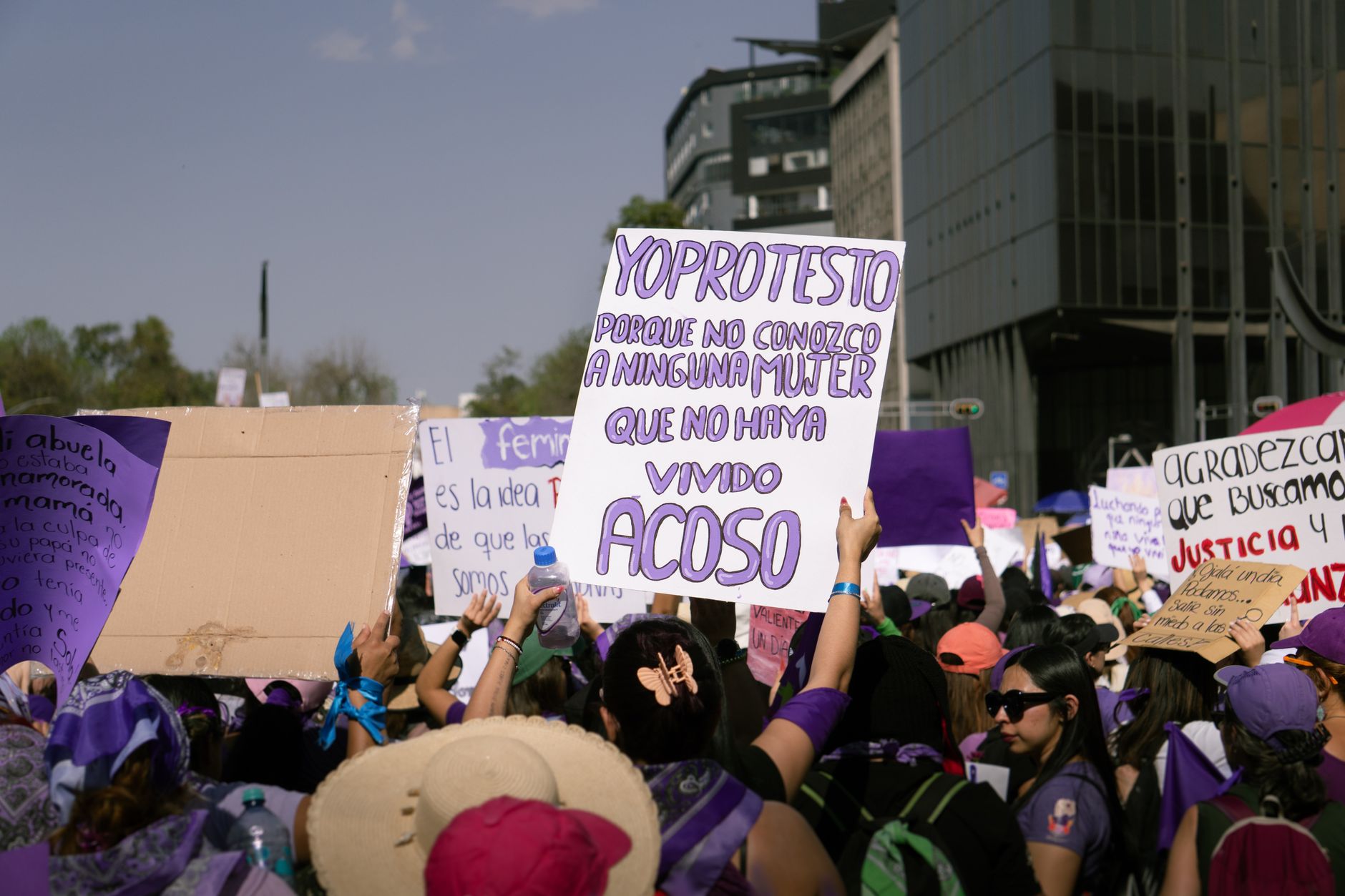
The Latin American "green wave" — the activist colour for reproductive rights — has produced more change in the past decade than any region globally. The pattern has been driven by feminist movements, court challenges rather than legislatures, and a generational shift among urban voters.
Europe's quiet liberalisation
Most of Europe has expanded access slightly or held steady. France amended its constitution in 2024 to enshrine abortion access, the first country to do so explicitly at the constitutional level. The UK's at-home medication abortion provisions, made permanent post-pandemic, remain in place. Ireland's 2018 referendum continues to bed in.
The exceptions are Poland, where access has been more restrictive than the rest of the EU, and Hungary, with various administrative tightenings. Both remain politically contested.
Africa's varied picture
The continental picture varies sharply:
- South Africa's permissive law remains an outlier in scope
- Mozambique, Cape Verde, and Tunisia have relatively permissive frameworks
- Most West and East African countries permit abortion only on narrow grounds (life of mother, rape, severe fetal abnormality)
- Several countries have liberalised modestly in the past decade — Ethiopia, Rwanda, Mozambique
- A small number — including Senegal — retain near-total bans
- Unsafe abortion remains a leading cause of maternal mortality across much of the continent
The Maputo Protocol commits African Union member states to permitting abortion in cases of rape, incest, severe fetal anomaly, and threat to maternal life. Implementation lags the commitment in most signatory countries.
What's actually changing access in 2026
Beyond the law itself, several developments are reshaping access:
Telemedicine and mail-order pills
Medication abortion via telemedicine has been the single biggest practical change. In countries where it's permitted, it has expanded access for rural and lower-income people more than any law change. In countries where it's restricted, networks like Aid Access have created cross-border supply that authorities have struggled to suppress.
Cross-border travel
Significant numbers of people travel for abortion services in 2026 — within the US, from Poland to Germany, from Northern Ireland to England, from restrictive African countries to South Africa. This is now a structural feature of access, not a fringe phenomenon.
Pharmacy-direct sales
In many lower-income countries, misoprostol is available directly through pharmacies for ulcer indications and is widely repurposed for self-managed abortion. The WHO and major medical organisations have shifted to acknowledge self-managed medication abortion under specific conditions as relatively safe; the legal status varies.
The legal grey zone of self-managed abortion
The criminalisation of self-managed abortion is the active legal frontier in many jurisdictions. Several US states have prosecuted individuals for managing their own abortions. Internationally, the same pattern recurs. The legal protections for self-management vary even within countries with permissive abortion laws.
Contraception, the quieter story
Lost in the abortion coverage is a parallel and largely positive story on contraception:
- Long-acting reversible contraception use is at all-time highs in most regions
- Over-the-counter hormonal contraceptive availability has expanded in several countries (US, UK, parts of Europe)
- Male contraceptive options (gel, vasectomy uptake) are growing modestly
- The unmet contraceptive need globally has shrunk, though large pockets remain
Where contraception access is strong, abortion rates trend down regardless of abortion law. This is the most consistent finding in the global data and is generally accepted across the political spectrum even where the implications are contested.
What South Africans should know specifically
For South African readers navigating this in 2026:
- Public-sector abortion services are available, free, and legal in the first trimester on request — though location matters significantly for actual access
- Designated facilities can be found via the National Department of Health, Marie Stopes (now MSI Reproductive Choices), and the Choice for Choices line
- Informal "abortion pills" advertised on street posters are unregulated and frequently unsafe or fake — the WHO-recommended regimens are available legally
- Conscientious objection by individual practitioners is permitted but they are required to refer onward; if they don't, that's a complaint-worthy breach
- Crisis pregnancy counselling is available through several NGOs that don't pressure toward any particular outcome — Marie Stopes and IPAS are the most reliably non-directive
The bottom line
Reproductive rights in 2026 is two stories at once. The aggregate global picture is more permissive than 20 years ago. The aggregate American picture is more restrictive than 50 years ago. The aggregate African picture is slowly liberalising on paper while implementation lags. The aggregate Latin American picture is the most rapidly liberalising in the world.
The gap between law and access is the underreported part of this story almost everywhere. Permissive law without delivery infrastructure — South Africa's situation — produces unevenly experienced rights. Restrictive law with cross-border infrastructure — much of the US — produces unevenly experienced restriction. The next decade's reproductive rights story will be less about the laws on paper and more about who can actually reach what services, in what conditions, with what privacy.
For people navigating their own reproductive decisions in 2026, the practical advice hasn't changed: know what your local law actually says, know where the legal services are, know your rights regarding refusal and referral, and don't trust anything advertised on a lamp post.