Dating culture's traditional first move — meet for drinks — has been quietly shifting. More adults, especially under 35, are dating without alcohol, or with minimal alcohol, or in contexts where alcohol simply isn't part of the script. The shift isn't moralising or anti-fun; it's pragmatic. Sober dating tends to produce better conversations, better decisions, and better follow-up. Adults are figuring this out and acting on it.
Why the shift is happening
Several streams are converging:
Generational drinking patterns
Gen Z drinks significantly less than millennials at the same age, who drank less than Gen X. The trend is well-documented across multiple countries. Not zero drinking — just less, less frequently, and with less centrality to social life.
The "mocktail boom"
Non-alcoholic options have improved dramatically. The era when "I don't drink" meant "I'll have water awkwardly" is over. Quality non-alcoholic spirits, beers, wines, and craft mocktails are widely available. The social space for sober drinking is much larger than a decade ago.
Mental health awareness
Awareness of alcohol's effects on mental health, sleep, anxiety, and physical health has reached the mainstream. Many adults — even ones who don't have alcohol problems — are choosing to drink less for general wellness reasons.
Dating fatigue
Adults who've been on dating apps for years and accumulated lots of forgettable drink-based first dates have started questioning whether the format is working. Sober dating filters for compatibility differently.
Post-pandemic recalibration
The years of bar closures and home-based socialising prompted many adults to develop new social patterns. Returning to bars hasn't been universal; some of those alternate patterns have stuck.
What sober dating looks like
The format options:
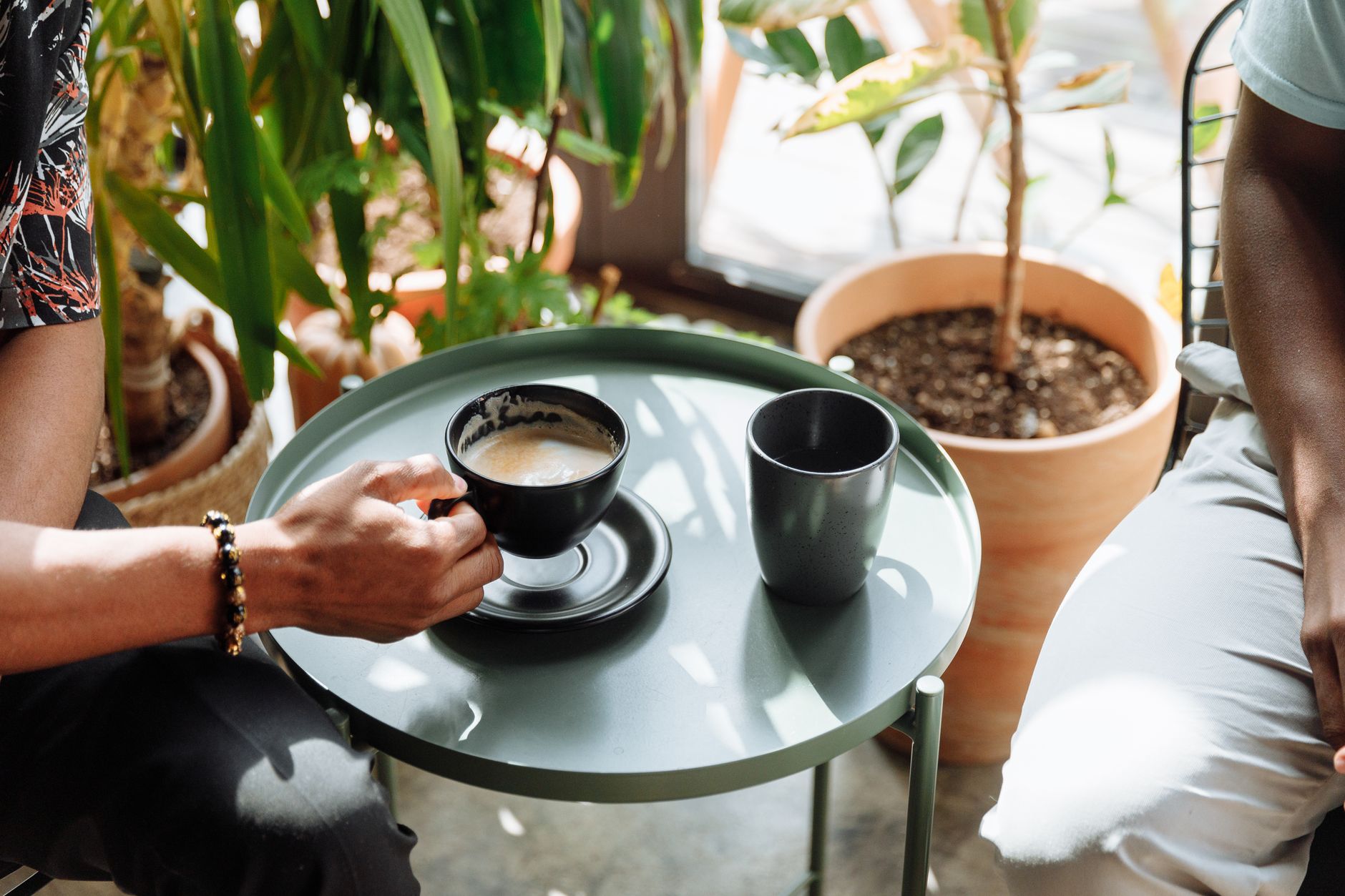
- Coffee dates — the classic alternative. Daytime, cheaper, naturally time-bounded
- Walking dates — particularly underrated. Outdoor, movement-based, easier to talk during
- Activity dates — markets, galleries, classes, light hikes — the activity is the conversational bridge
- Mocktail bars — same atmosphere as a regular bar, no alcohol
- Restaurants without bar emphasis — many good restaurants don't push alcohol
- Day-to-evening dates — longer than coffee, doesn't require alcohol-as-social-lubricant
The first-date format works fine without alcohol. The "drinks" default was always partly a crutch — a way to manufacture social ease that's available through other means.
Why the conversations are different
Sober first dates produce noticeably different dynamics:
Better signal
You see the actual person, not the slightly-drunk version. Personality, conversational ability, attention quality, social skill — all visible without the alcohol-induced softening.
This is a feature: you learn faster whether there's actual compatibility. It's also a vulnerability: there's nowhere to hide an awkward conversation behind two glasses of wine.
Better consent dynamics
Decisions about whether to extend the date, what to do next, whether to be physical — all clearer without alcohol. The "we both got drunk and ended up sleeping together" trajectory doesn't apply.
Whatever happens between sober adults reflects more accurate desire than what happens between drunk adults.
Better recall
You remember the conversation. You can reflect on it accurately afterward. The "did we have a good time?" question has a clearer answer.
Less performance
Many adults rely on alcohol for first-date charisma. Sober dating asks you to be conversationally interesting without the chemical assist. This is initially harder for some people; the skill develops with practice.
The "but I need a drink to relax" issue
Some adults find first dates without alcohol genuinely harder. The anxiety is real. Worth examining:
- Does the alcohol relax you, or just numb the social signals you'd otherwise be reading?
- What's the underlying anxiety about? Performance? Rejection? Social skill?
- Would addressing the anxiety directly produce better dating outcomes than chemically managing it?
The "I'm just shy" framing is sometimes accurate; sometimes it's hiding social anxiety that responds well to actual treatment. Worth being honest with yourself about which.
The practical first-move
If you're trying to suggest a non-alcohol first date, the framings that work:
- "Want to grab coffee on Saturday?" — specific, low-stakes, no need to explain
- "There's a Saturday morning market I've been wanting to check out — interested?"
- "I've been trying that walking-date thing — would you be up for a stroll through [park]?"
- "Want to meet at [non-alcohol venue] after work?"
You don't have to announce "I don't drink" or "let's not have alcohol involved." Choosing the venue itself does the work.
For people who do drink
Sober dating doesn't mean lifelong sobriety. Many adults choose sober first dates and drinking later in established relationships. The first-date principle: alcohol clouds the calibration; later, it can be part of relaxed shared experiences.
You can drink less on dates and more in other contexts. The pattern is fine.
For partners who are mismatched on drinking
If you're someone who drinks regularly and your date doesn't:
- Don't make it weird. "I'll have what they're having" or just order normally — both fine.
- Don't pressure them. The "come on, just one" framing kills evenings.
- Don't comment on it as an interesting personality trait. Most non-drinkers are tired of having their non-drinking remarked on.
- If you find yourself unable to enjoy a date without alcohol, that's information about you, not them.
The South African context
SA's drinking culture is heavy in certain communities and minimal in others. The "going for a drink" framework works better in some demographics than others.
Cultural factors:
- Significant Muslim population for whom alcohol-free socialising is the norm anyway
- Significant religious-Christian population with similar patterns
- Drinking culture that's traditionally male-dominated in some communities
- Dating venues in SA cities that already accommodate non-drinking adults — coffee culture is strong, market scene is robust, outdoor activities are accessible
Sober dating in SA isn't novel; it's already widely practised in many communities and increasingly cross-pollinating into others.
The "are sober dates boring" question
Common worry. The actual answer: only as boring as the participants. Adults who can hold conversation, who have genuine curiosity about other people, who bring some life to a conversation — all of these are interesting sober. Adults who depend on alcohol to be interesting are working with a fragile social position regardless.
Most people who try sober dating discover their dates are more interesting, not less. The conversations go deeper because there's nothing else doing the work.
What the research suggests
Studies on sober vs alcohol-involved dating outcomes (limited but growing):
- Sober first dates produce more accurate compatibility judgments
- Couples who started sober tend to have lower drinking-related conflict later
- Sexual decisions made sober have lower regret rates
- Sober daters report higher overall satisfaction with the dating process
None of these are huge effects. All point in the same direction.
The bottom line
Sober dating is a growing pattern that produces measurably better outcomes for many adults — better signal, better decisions, better recall, less performance. The shift is partly generational, partly mental-health-aware, partly post-pandemic recalibration.
You don't have to be sober permanently to date sober. The first-date principle (calibration matters; alcohol clouds it) is solid even for adults who drink in other contexts. Try it for a few months and see what happens.
The "drinks" default was always partly a crutch. Walking it back doesn't make dates worse. Often, the opposite.