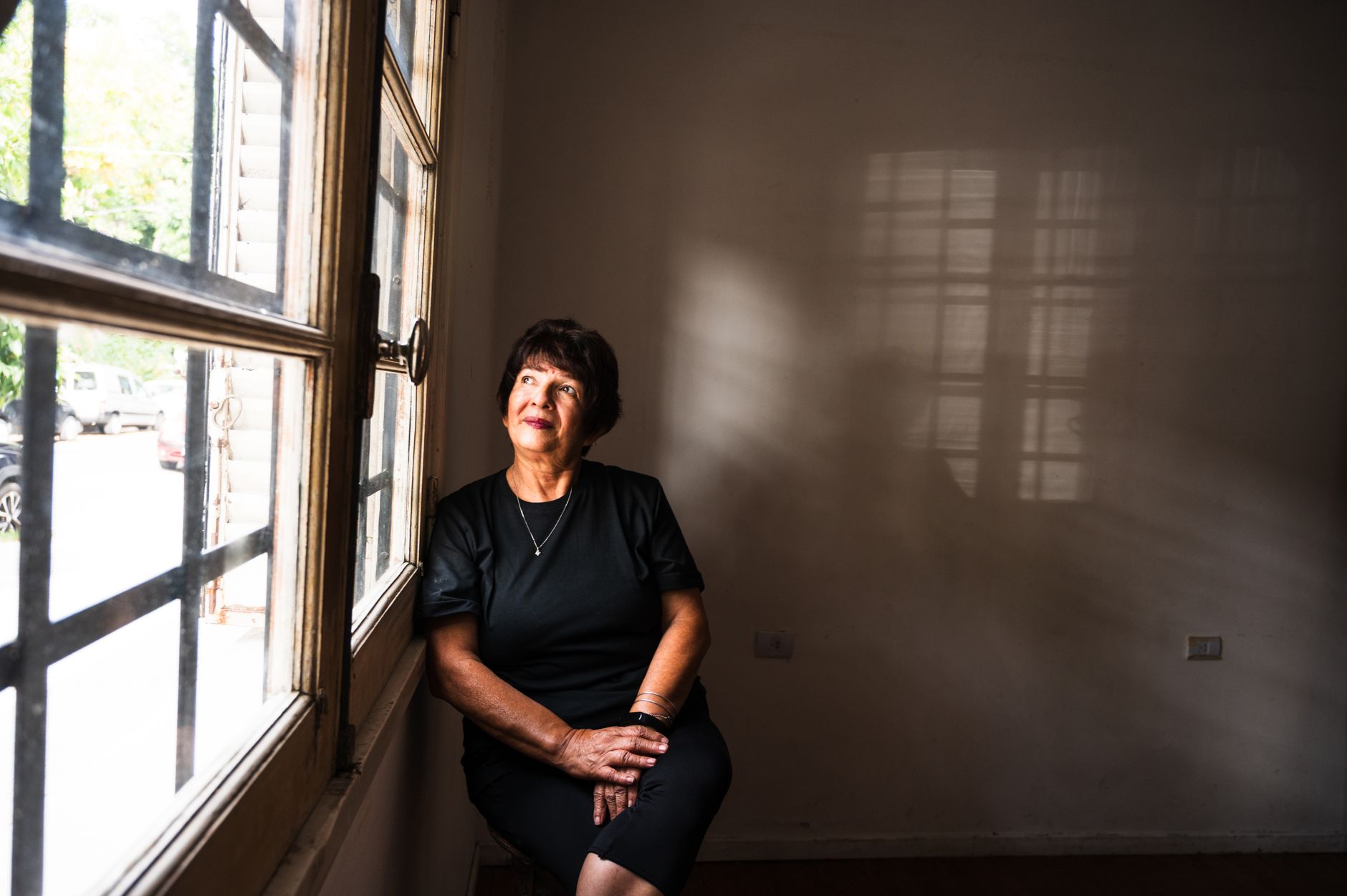
The reader writes: I'm 32, female, and I've never had sex. Not by ideology — it just didn't happen. I'm ready now. I have no idea where to start. Every advice piece I find is either "wait for the right person" or "just go for it." Neither helps. Where does someone like me actually begin?
You are not as alone as you think. We get a version of this letter every few weeks — from women in their late twenties through their forties, from men in similar shape, from people who simply landed here for reasons that aren't tidy.
Let's give you the answer the platitudes don't.
First, the framing
You don't have a problem. You have a life that didn't include this yet. The "yet" is doing a lot of work. The cultural script that says everyone has had partnered sex by twenty is not true and never has been — it's just loud. The proportion of adults in their thirties who haven't had partnered sex is small but not vanishing, and the proportion who haven't had it in the configuration they actually want is much larger.
Some of what comes next requires you to put down the story that you're running late. There's no schedule. The next year of your life can include any of this in any order, and none of it owes the previous decade an explanation.
What "starting" actually means
You said you want to "start." That word is doing different work for different people. Worth getting specific:
- Do you want to know what your body responds to?
- Do you want to feel comfortable being naked with someone?
- Do you want a first partnered experience that isn't traumatic?
- Do you want a long-term partner, with sex as part of that?
- Do you want to lose your virginity, full stop, and get the first time over with?
These are not the same project. Some can run in parallel; some are best done sequentially. If you treat them all as one thing called "having sex," you'll feel paralysed because you're trying to solve five questions at once.
The order I'd suggest
1. Get to know your own body first
If you haven't already, this is the unsexy starting point. Solo exploration. What kind of touch do you like? Where? What rhythm? Do you orgasm reliably alone, and if so, how?
This isn't homework. It's the foundation. If you don't know what your body responds to, you'll find out under pressure with someone watching, and that's a harder classroom. Take a few weeks (or months — no rush) to learn what's yours. A vibrator is a reasonable purchase. Not because everyone needs one, but because they often shorten the learning curve.
By the time you're with a partner, you want to be able to say, even silently in your head, this is what tends to work for me.
2. Practise being seen
Many late-first-time people aren't actually most afraid of sex. They're afraid of being seen — undressed, vulnerable, in unflattering light, doing something they don't yet know how to do. The remedy is graduated exposure to that, not avoidance.
Ways in: dating that includes physical affection short of sex. Letting someone you're attracted to see you in less than full clothing. Kissing someone for the first time in a long time. Each of these on its own is a meaningful first. None of them are "the" first.
The "first time" framing collapses dozens of small firsts into one event and makes that one event terrifying. Spread them out. Each one done lowers the temperature of the next.
3. Choose your first partner deliberately
The cultural advice about "the right person" is often dressed-up romanticism. Here's the practical version: the right first partner for someone in your situation is unhurried, communicative, and not interested in your inexperience as a story.
What to look for:
- Someone you can talk to without performing
- Someone who doesn't treat sex as a performance contest
- Someone capable of going slowly without making you feel pitied
- Someone you trust enough to say "stop" or "wait" or "different" in the moment
What you don't strictly need: a long-term partner. Some people want their first time inside a serious relationship; that's a coherent choice. Others want to lower the stakes and have an early partner who's just kind, present, and not the love of their life. Both are legitimate. Neither is shameful.
4. Decide whether to disclose your inexperience
You don't owe anyone the full timeline of your life. You also benefit, with a first partner, from them knowing roughly where you're at — because the script for "first time at 32" is gentler and slower than the script for "casual evening between two experienced people."
A line that works: I haven't done this much. Can we go slowly?
You'll find out a lot about a person from how they receive that sentence. Anyone who hears it and gets weird about it has handed you data. The right person hears it and slows down without making it a thing.
5. Plan the first time more than you'd expect to
Plan the logistics, not the choreography. Where it'll happen — somewhere private, comfortable, where you won't be interrupted. Have lube on hand (most first encounters benefit from it; vaginal lubrication is unreliable under nerves). Have water. Have soft light, not overheads. Have a way out — emotionally and practically — if it doesn't feel right.
Don't plan the act itself. The act will be what it is. Planning the conditions takes the survivable practical worries off the table so the experience itself can breathe.
What to expect
Almost no one's first partnered sex is what they imagined. It often isn't dramatic. It often involves laughing, fumbling, stopping, restarting. It is rarely the cinematic version. This is normal and good. The mythologised first time is what makes the actual first time feel disappointing — when in fact a slightly awkward, mostly-okay first time is exactly what the average human gets.
You may not orgasm. Most people don't, the first time partnered, especially with vaginal anatomy. That isn't a verdict on you or the partner.
You may feel emotionally flat after. Or weepy. Or relieved. Or nothing in particular. All of these are normal post-first-time states.
You may want to do it again the next day, or not for weeks. Both are normal.
What you do not owe
You don't owe your first partner a follow-up relationship.
You don't owe yourself any particular reaction to having done it.
You don't owe anyone the story afterwards.
You don't owe the cultural script a tidy "and then she finally lost her virginity" arc.
Some specific worries that come up
Reader letters in this category tend to circle a small number of specific anxieties. Worth addressing directly.
"I won't know what I'm doing." Nobody knows what they're doing the first time, regardless of when the first time is. The difference is that at 17 nobody around you knows either. At 32, you may worry your partner will know more — and they will, because they've had practice. But practice doesn't translate the way you think. Sex with a new partner is its own learning curve every time. Your partner will be paying attention to you, not auditing your technique.
"My body looks wrong for this." Almost every adult thinks something about their body disqualifies them. Some specific worry — a scar, a weight, a feature, a smell, a stretch mark, a thing you've been told is unattractive. The reality is that the partner who's already attracted to you is already attracted to the body you actually have. The version they want to see naked is the one you have, not the one you'd have after six more months of avoiding mirrors.
"It will hurt." First-time vaginal sex can be uncomfortable, especially without enough lubrication or foreplay. It does not have to be — and it definitely does not have to be the dramatic painful event the cultural script suggests. The hymen, contrary to lasting myth, does not "break" in any real sense for most people; it simply stretches, often without bleeding, often without notice. If pain happens, you can stop. Stopping is allowed. Stopping is a feature, not a failure.
"I'll cry." Some people do. The first time can produce unexpected emotion afterwards — relief, sadness, joy, tenderness, weariness. The right partner does not panic at this. Tears after sex are not a verdict on the experience.
"I won't be able to come." You probably won't, the first time partnered. Most people don't. This is normal. Orgasm with a new partner takes time, comfort, and usually some trial and error. Your solo orgasm capacity is intact and will translate eventually.
The harder bit
Sometimes "I'm 32 and haven't yet" carries more than just timing — sometimes there's body shame, social anxiety, religious history, an old experience that wasn't quite consensual but didn't fit the word "assault," or a family environment that made sex feel like a trapdoor. None of this disqualifies you. All of it deserves attention before, or alongside, partnered sex.
If any of those resonate, a few sessions with a sex-positive therapist will move things faster than another year of trying to figure it out alone. Some people pair this with the dating timeline; others want it done first. There's no rule.
The bottom line
You're not late. There's no train you missed. The route from where you are to where you want to be has predictable stations: knowing your own body, getting comfortable being seen, choosing a first partner who can move at your pace, and planning the conditions while letting the experience itself surprise you.
Take a year if you need a year. Most people who do this slowly report a much better first time than the people who rushed through theirs at 17.
You're going to be fine. You're going to be more than fine.
If anxiety, religious history, or past experience is the real obstacle, a sex-positive therapist or sexologist is a meaningful next step. In SA, the Sexual Health and Wellness Society lists practitioners who work specifically with first-time and late-first-time clients.